For cooperation and more details, feel free to email us or call directly for consultation.

Home > News & Blog > Knowledge > What Is RF Welding? Process, Principles and Industrial Applications
RF welding is a process that uses a high-frequency alternating electric field to generate heat within compatible dielectric materials, allowing them to fuse under pressure. It is commonly used for welding PVC and certain other polar thermoplastics to create strong, airtight, or liquid-tight seams. The process is also called radio frequency welding, high frequency welding, or dielectric welding.
The main advantages of RF welding include localized heat generation, consistent weld quality, repeatable cycle times, and the ability to produce complex seam shapes using custom electrodes and welding dies.
Radio frequency (RF) welding is an industrial joining process that uses high-frequency electromagnetic energy to generate heat inside compatible thermoplastic materials. Also known as high frequency welding or dielectric welding, this technology joins materials such as polyvinyl chloride (PVC) and thermoplastic polyurethane (TPU) by applying pressure while the material is heated and then cooled under controlled conditions.
RF welding is widely used to manufacture medical products, inflatable structures, flexible containers, industrial fabrics, automotive components, and other products that require strong, consistent seams. Compared with conventional heat sealing, RF welding generates heat within the material rather than relying solely on heat transferred from an external heated surface.
Understanding the RF welding process, its operating principles, material compatibility, and industrial applications helps manufacturers select suitable welding equipment and improve product quality, production efficiency, and seal consistency.
RF welding, or radio frequency welding, is a thermoplastic joining method in which high-frequency electrical energy produces molecular heating within a suitable material. Pressure is applied through an electrode or welding die to bring the heated surfaces into close contact. After the RF energy is switched off, the joint is held under pressure while the material cools and solidifies.
Unlike ultrasonic welding, which uses mechanical vibrations, RF welding relies on an alternating electric field. Unlike conventional heat sealing, which transfers heat from a heated tool to the material surface, RF welding generates heat within the dielectric material itself.
The method is particularly suitable for flexible thermoplastics with appropriate dielectric properties, including PVC and certain grades of TPU. Material formulation, thickness, moisture content, electrode design, and machine settings all affect the final weld.
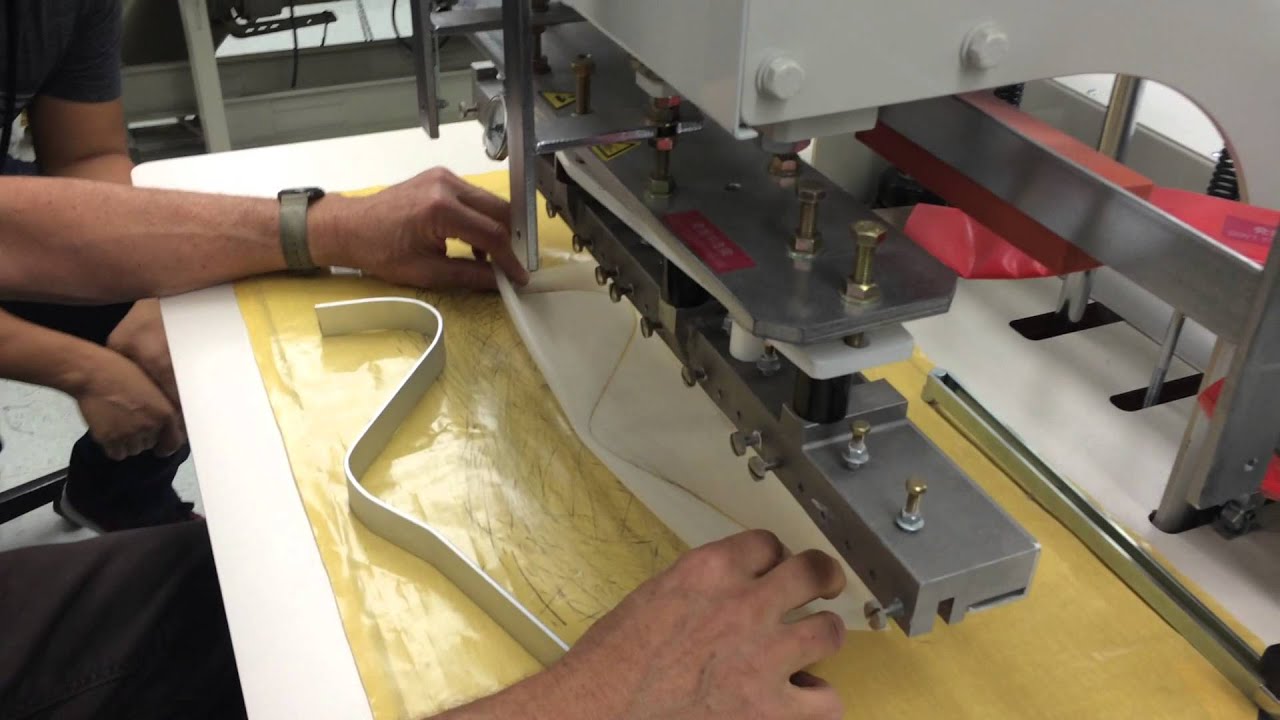
RF welding works by applying a high-frequency electric field across compatible thermoplastic materials positioned between conductive electrodes. The field causes molecular polarization and dielectric losses within the material, converting electrical energy into heat.
When the material reaches a suitable welding temperature, the pressure from the electrodes brings the joining surfaces together. The material then fuses, forming a bonded seam. The joint is usually cooled under pressure before the electrodes open.
The process can be divided into five main stages.
The thermoplastic sheets, films, coated fabrics, or other compatible components are positioned between the upper and lower electrodes. The surfaces must be clean and correctly aligned to produce a consistent joint.
For applications such as inflatable products, medical bags, and industrial covers, the position and shape of the weld determine the finished product's dimensions and sealing performance.
The welding electrodes close against the material, and controlled pressure is applied. This pressure helps maintain contact between the layers and supports uniform bonding throughout the intended weld area.
Too little pressure may result in incomplete bonding or irregular seams. Excessive pressure may cause material thinning, deformation, or damage, depending on the material and electrode geometry.
The RF generator supplies high-frequency electrical energy to the welding electrodes, establishing an alternating electric field across the material.
In suitable dielectric materials, molecular polarization and dielectric losses generate heat internally. This heat softens the thermoplastic in the welding zone, allowing the surfaces to fuse.
The frequency, power level, energy application time, material thickness, and electrode design must be matched to the application. RF welding systems commonly operate in industrial frequency bands such as 13.56 MHz, 27.12 MHz, or 40.68 MHz, subject to the applicable equipment and regulatory requirements.
Once sufficient heat has been generated, the RF energy is switched off. The electrodes continue to hold the material under pressure while the welded area cools and solidifies.
This stage helps the joint retain its shape and reduces the risk of separation or deformation before the material has stabilized.
After the cooling period, the electrodes open and the finished component is removed. The operator or automated inspection system checks the seam for defects such as incomplete bonding, wrinkles, burn marks, excessive thinning, or inconsistent weld width.
For products requiring airtight or liquid-tight performance, additional leak testing may be necessary.
The operating principle of RF welding is dielectric heating. When a high-frequency electric field is applied to a dielectric material, its polar molecules respond to the alternating field. Their repeated reorientation and associated energy losses generate heat within the material.
The amount of heat generated depends on several interacting factors:
RF heat generation is therefore not determined by power alone. A suitable welding window must be established for each combination of material, thickness, electrode geometry, and production requirements.
RF welding depends on a material's dielectric properties. Polar thermoplastics such as PVC generally respond well to RF energy because they can absorb energy through dielectric losses.
Other plastics, including polyethylene and polypropylene, typically have lower dielectric losses and are more difficult to weld directly using conventional RF welding. Some material combinations may require alternative joining methods or specially developed material systems.
The exact formulation also matters. Plasticizers, fillers, pigments, coatings, moisture, and additives can change the material's electrical and thermal behavior. Manufacturers should test the actual production material rather than rely solely on its generic polymer name.
RF welding and conventional heat sealing both join thermoplastic materials, but they use different methods of heat generation.
| Feature | RF Welding | Conventional Heat Sealing |
|---|---|---|
| Heat source | High-frequency electric field | Heated sealing surface |
| Heat generation | Primarily within suitable dielectric material | Transferred from the heated tool |
| Common materials | PVC and selected RF-weldable thermoplastics | A wide range of heat-sealable films and thermoplastics |
| Tooling | Conductive electrodes or welding dies | Heated sealing bars or jaws |
| Typical applications | Inflatable products, medical bags, flexible PVC components | Packaging films, pouches, liners, and compatible laminates |
| Process considerations | RF power, frequency, pressure, weld time, and cooling | Temperature, pressure, dwell time, and cooling |
RF welding can offer efficient, localized heating and repeatable results when the material is compatible with the process. Conventional heat sealing may be more appropriate for materials with poor RF-welding characteristics or for products where heated tooling is simpler and more economical.
Neither method is universally superior. The right choice depends on material properties, seam requirements, product design, production volume, and equipment cost.
RF welding is most effective with thermoplastics that respond adequately to dielectric heating.
Polyvinyl chloride PVC is one of the most widely used materials for RF welding. Flexible PVC formulations are commonly found in inflatable products, medical bags, protective covers, advertising products, and industrial flexible structures.
PVC can form strong, uniform seams when the material formulation and welding parameters are properly matched. Its performance depends on factors such as plasticizer content, thickness, surface condition, and thermal stability.
Certain TPU formulations can be joined by RF welding. TPU is used in applications requiring flexibility, abrasion resistance, and mechanical durability.
However, not every TPU grade behaves identically under an RF field. Material testing is necessary to determine whether a specific formulation can achieve the required weld strength and sealing performance.
Some additional thermoplastics and specialty polymer formulations may be suitable for RF welding, depending on their dielectric properties and construction.
Materials such as polyethylene (PE) and polypropylene (PP) generally have low dielectric losses, making direct RF welding more challenging. Multilayer structures, coatings, or specially formulated materials should be evaluated individually before selecting an RF welding process.
Material compatibility testing should include weld strength, appearance, dimensional stability, and leak resistance where applicable.
RF welding is used in industries where flexible thermoplastic materials must be joined with consistent seams. The process is particularly useful for products with complex outlines, repeated weld patterns, or airtight sealing requirements.
The medical industry uses RF welding to manufacture compatible medical bags, fluid containers, flexible tubing assemblies, blood-pressure cuffs, and other thermoplastic components.
For example, RF welding can join compatible films used in fluid bags and can create seams in certain inflatable medical devices. In blood-pressure cuffs, the method may be used to weld suitable bladder materials or flexible components, depending on the product design.
Medical manufacturing requires controlled processes, traceable materials, validated production parameters, and appropriate inspection. A strong-looking seam alone does not establish that a product meets its intended safety or performance requirements.
RF welding is commonly used to manufacture inflatable mattresses, air cushions, inflatable boats, water toys, and other products made from compatible coated fabrics or flexible thermoplastic films.
The process can create continuous seams that retain air when the material and welding conditions are suitable. Electrode geometry can also be customized to produce different product shapes and seam patterns.
Flexible PVC-coated fabrics are used for truck covers, tents, awnings, industrial curtains, and protective enclosures. RF welding can join selected materials while reducing the need for separate adhesives or stitching.
For outdoor products, manufacturers must consider UV exposure, temperature changes, wind loads, abrasion, and long-term material aging in addition to initial seam strength.
RF welding is used for selected flexible automotive and transportation components, including protective covers, flexible interior parts, and compatible coated-fabric assemblies.
The process can support repeatable production of shaped joints, particularly when the design requires consistent seam placement and controlled bonding.
RF welding can join compatible thermoplastic films and coated materials used in selected pouches, flexible containers, document holders, and specialty packaging products.
The material must be suitable for dielectric heating, and the finished joint must meet the product's requirements for strength, cleanliness, leakage, and durability.
Inflatable advertising structures, PVC display products, banners, and flexible promotional items can incorporate RF-welded seams. Custom electrodes allow manufacturers to create shaped joints and repeated patterns while maintaining a consistent appearance.
An RF welding machine is a piece of welding equipment that generates high-frequency electrical energy and applies it to compatible thermoplastic materials through a controlled electrode system.
A typical system includes the following components:
Machine configurations vary according to product dimensions, production volume, required welding force, automation level, and material characteristics.
Manual RF welding machines are suitable for smaller production runs, sample development, and applications requiring operator control.
Pneumatic RF welding machines use pneumatic systems to apply pressure and are often used for repeatable production tasks.
Hydraulic RF welding machines can provide high clamping forces for applications requiring larger electrodes or substantial pressure.
Automated RF welding systems integrate material handling, programmed welding sequences, and other production controls to improve consistency and reduce manual operations.
The appropriate machine depends on the required weld area, material thickness, production rate, tooling design, and quality standards.
A stable RF welding process requires coordinated control of electrical, mechanical, and thermal parameters. Adjusting one parameter without considering the others can affect weld quality.
Power influences the rate at which energy is delivered to the welding area. Insufficient power may produce weak or incomplete bonds, while excessive power can lead to overheating, arcing, surface damage, or material thinning.
Welding time determines how long RF energy is applied. The appropriate duration depends on material thickness, dielectric properties, electrode geometry, and machine output.
Pressure maintains contact between the layers and helps form the joint. The pressure setting should suit the material and tooling rather than simply being increased to improve bond strength.
Cooling time allows the fused material to stabilize before the electrodes release it. Adequate cooling is particularly relevant for thicker materials, complex weld geometries, and products that must retain their shape.
Electrode dimensions, edge geometry, surface condition, and alignment influence the distribution of the electric field and the resulting weld. Custom tooling can help produce narrow seams, complex outlines, and repeatable shapes.
The total cycle time includes material loading, electrode closure, RF energy application, cooling under pressure, and release. In automated systems, material handling and inspection may also contribute to the production cycle.
Shorter cycle times can increase output, but reducing welding or cooling time too aggressively may lower seam strength or sealing consistency. Production optimization should balance throughput with validated product quality.
RF welding defects can result from unsuitable materials, incorrect parameter settings, inconsistent pressure, poor tooling condition, or inadequate process control.
| Defect | Possible Cause | Recommended Action |
|---|---|---|
| Weak weld | Insufficient energy, unsuitable material, or inadequate contact | Verify material compatibility and optimize power, time, and pressure |
| Burn marks | Excessive energy or localized field concentration | Reduce energy input and inspect electrode geometry |
| Arcing | Excessive field strength, gaps, contamination, or poor setup | Check material positioning, electrode condition, and RF settings |
| Uneven seam | Misaligned electrodes or inconsistent pressure | Inspect tooling alignment and press uniformity |
| Material thinning | Excessive pressure, heat, or unsuitable tooling | Adjust pressure and energy settings |
| Leakage | Incomplete welds, gaps, or inconsistent seam geometry | Inspect the weld and conduct appropriate leak tests |
A systematic trial process is more effective than making several uncontrolled adjustments at once. Record the material specification, machine settings, tooling configuration, and test results so that the successful welding window can be reproduced.
Selecting suitable RF welding equipment begins with the product and material requirements, not just the machine's rated power.
Confirm that the actual material formulation can be welded using RF energy. Request sample trials if the material is unfamiliar or contains coatings, fillers, or multiple layers.
Consider the maximum weld area, seam width, component geometry, and electrode layout. Larger or more complex products may require a different press structure or customized tooling.
Estimate the target output per shift and evaluate the complete cycle time, including loading, welding, cooling, and unloading. Automation may be appropriate when consistent output and reduced manual handling are required.
Define the required peel strength, tensile performance, airtightness, liquid resistance, or other product-specific acceptance criteria. The machine should be tested against these requirements using the intended material.
RF welding equipment should include suitable shielding, grounding, interlocks, emergency stops, and controls for electrical and mechanical hazards. Manufacturers should evaluate RF exposure and comply with applicable workplace and equipment requirements.
For medical, pressure-containing, or other regulated products, the welding process may also need documented validation and product-specific testing.
RF welding uses high-frequency electrical energy and mechanical pressure. Equipment should be installed, operated, and maintained according to the manufacturer's instructions and applicable safety standards.
Operators should receive training in machine operation, electrode setup, safe material handling, and emergency procedures. RF shielding and interlocks must be maintained, and electrical components should only be serviced by qualified personnel.
Electrodes and recently welded materials may also present burn or pinch hazards. Appropriate guarding, protective measures, and routine equipment inspections help reduce these risks.
For consistent production, safety procedures should be integrated into machine setup, maintenance, process validation, and operator training.
RF welding continues to serve applications where compatible thermoplastics require repeatable seams and controlled joining. Improvements in process monitoring, digital controls, electrode design, and automated handling can help manufacturers manage production variability and document welding conditions.
For high-volume manufacturing, monitoring energy delivery, pressure, and cycle times can make it easier to identify process deviations. Automated handling and inspection can also reduce dependence on manual operations.
The practical value of these developments depends on the application. Material compatibility, equipment condition, process validation, and appropriate testing remain necessary for achieving reliable results.
RF welding stands for radio frequency welding. It is also called high frequency welding or dielectric welding because it uses a high-frequency electric field to generate heat within suitable dielectric materials.
RF welding generates heat through dielectric losses. An alternating electric field causes polar molecules in a compatible material to respond repeatedly to the field, converting electrical energy into heat within the material.
Flexible PVC is one of the most common RF-weldable materials. Certain TPU formulations and other compatible thermoplastics can also be welded. Materials such as PE and PP are generally more difficult to weld directly because of their lower dielectric losses.
RF welding uses a high-frequency electric field to generate heat within suitable dielectric materials. Conventional heat sealing transfers heat from a heated tool to the material. The better method depends on material compatibility, seam design, production requirements, and cost.
Yes. RF welding is used for selected medical products, including compatible fluid bags, flexible containers, and components of certain inflatable medical devices. Medical applications require suitable materials, validated manufacturing processes, and testing appropriate to the intended use.
Yes. RF welding can create airtight or liquid-tight seams when the material, electrode design, welding parameters, and cooling conditions are properly controlled. Leak testing may be required to confirm performance.
The main parameters include RF power, welding time, pressure, cooling time, electrode geometry, and material properties. These variables must be optimized together to achieve the required weld strength and appearance.
RF welding cycle times vary with material thickness, weld area, machine configuration, and product design. The complete cycle includes loading, electrode closure, energy application, cooling, and release. Actual cycle times should be established through production trials.
Arcing can result from excessive electric field strength, gaps between the material and tooling, contamination, unsuitable material conditions, or incorrect machine settings. Correct setup, clean tooling, appropriate parameter control, and functioning safety systems help reduce the risk.
Evaluate the manufacturer's experience with your material and application, machine configuration, available tooling customization, safety features, process testing capabilities, technical support, and ability to demonstrate the required weld quality. Where possible, conduct sample trials using your actual production materials before purchasing equipment.
RF welding is a dielectric welding process that uses a high-frequency electric field to generate heat within compatible thermoplastic materials. By combining internal heat generation with controlled pressure and cooling, manufacturers can produce strong, repeatable seams for products ranging from medical components to inflatable structures and industrial covers.
Choosing the right RF welding machine requires an understanding of material properties, electrode design, welding parameters, production cycle times, and final product requirements. When these factors are evaluated together, RF welding can provide an effective joining solution for demanding industrial applications.