For cooperation and more details, feel free to email us or call directly for consultation.

Home > News & Blog > Knowledge > RF Welding vs. Heat Sealing: Key Differences and Applications
RF welding and heat sealing are widely used joining methods for thermoplastic materials in medical devices, inflatable products, fabric structures, and industrial applications. Although both methods create a bond between material surfaces, they differ in how heat is generated, how materials are joined, and which products they suit best.
RF welding uses radio frequency energy to generate heat within compatible materials through dielectric heating. Conventional heat sealing transfers heat from a heated tool or sealing bar to the material surface. These differences affect sealing speed, bond consistency, material compatibility, production efficiency, and the types of products manufacturers can produce.
Understanding RF welding vs. heat sealing helps manufacturers select an appropriate welding process for their material properties, product design, performance requirements, and production volume.
RF welding, also called radio frequency welding, high frequency welding, or dielectric welding, is a manufacturing process that joins compatible thermoplastic materials by using high-frequency electrical energy to generate heat within the material.
An RF welding machine applies an alternating radio frequency electric field across the material placed between electrodes. Polar molecules within the material respond to this field, generating heat through molecular motion and dielectric losses. The heated material softens or melts at the interface, and applied pressure brings the surfaces together to create a bond.
After the RF energy is switched off, pressure is maintained while the joint cools and solidifies. This produces a sealed joint without relying solely on heat transferred from an external heated tool.
RF welding technology is commonly used with suitable grades of polyvinyl chloride (PVC), thermoplastic polyurethane (TPU), and certain other dielectric materials. Material suitability depends on dielectric properties, formulation, thickness, additives, and processing conditions.
Heat sealing is a joining process that uses externally applied heat and pressure to bond thermoplastic surfaces. Heat typically comes from a heated bar, jaw, plate, or continuous sealing element that transfers thermal energy to the material.
During the welding process, the material surfaces soften or melt at the contact area. Pressure brings the softened layers into contact, allowing them to fuse. The joint is then cooled under controlled conditions to form a stable seal.
Heat sealing is widely used in flexible packaging, medical packaging, food pouches, plastic bags, and laminated film products. Depending on the application, the equipment may use impulse heating, constant-temperature bars, rotary sealing elements, or continuous band sealers.
Unlike RF welding, conventional heat sealing does not require the material to respond to an electromagnetic field. Its effectiveness depends on the material's thermal properties, melting behavior, surface structure, and the sealing temperature, pressure, and dwell time.
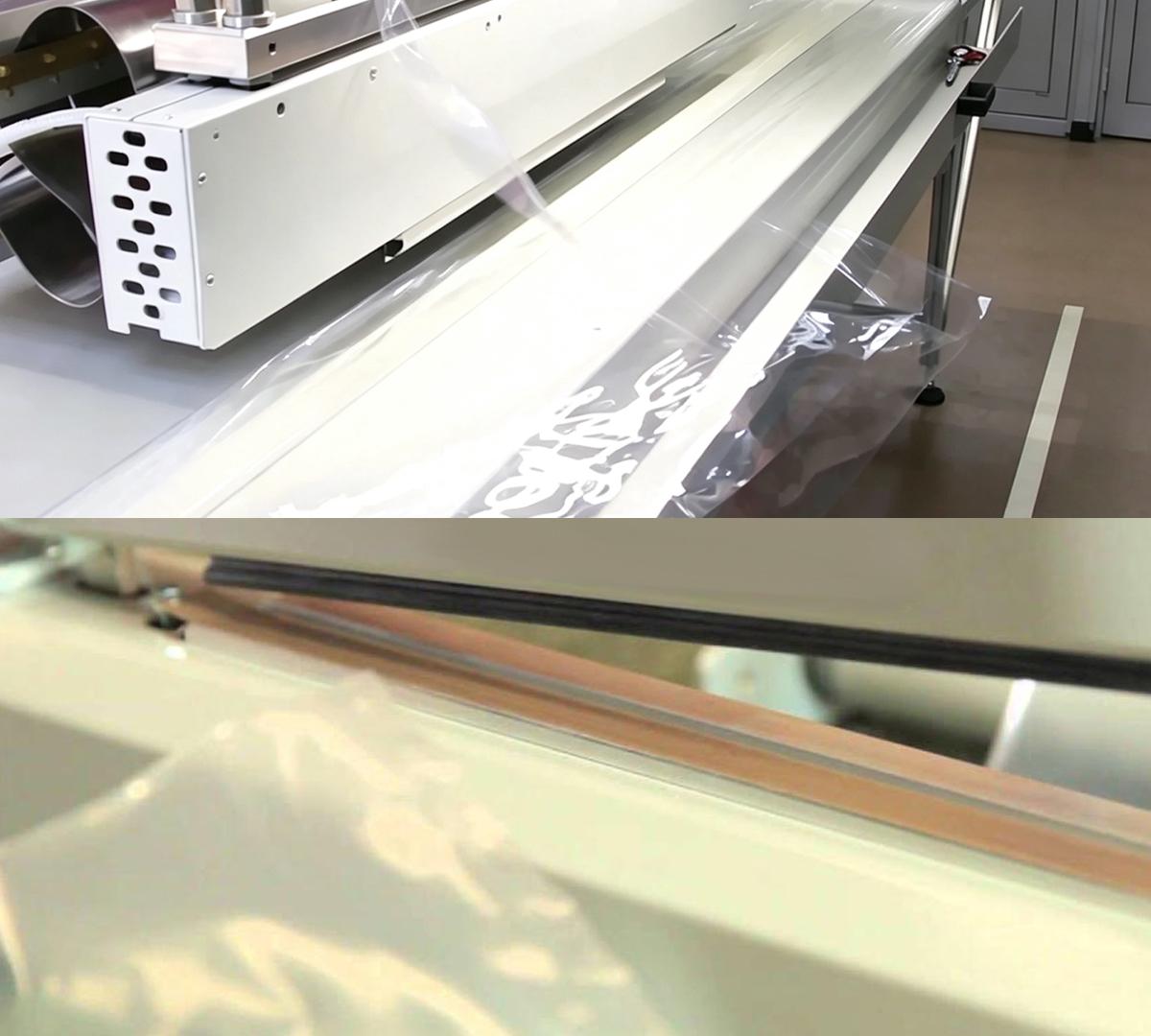
RF welding and heat sealing both join thermoplastic materials, but they use different heating mechanisms.
The best method depends on the material formulation, thickness, seal geometry, required bond strength, production speed, and equipment cost. RF welding is not suitable for every thermoplastic, and heat sealing can also produce strong, durable seals when the process is properly controlled.
RF welding work involves several coordinated stages. The machine must deliver suitable RF energy while maintaining the correct pressure and electrode alignment.
The operator or automated handling system positions two compatible thermoplastic layers between the welding electrodes. The electrode profile determines the shape and dimensions of the intended seal.
The RF welding machine generates a high-frequency electric field across the material. In suitable polar materials, molecular responses to the alternating field produce dielectric heating.
This process differs from conventional resistance heating, where heat originates in a heated element and travels toward the material.
The electrodes apply pressure as the material reaches its required processing temperature. This helps establish contact between the softened surfaces and controls the final joint geometry.
The softened interfaces fuse together to create a bond. Proper control of RF energy, pressure, and processing time helps reduce incomplete sealing, excessive melting, and material deformation.
The RF energy is switched off, and pressure is maintained as the material cools. The electrodes then release the finished component.
The resulting joint can provide consistent seal dimensions and a clean appearance when the material, tooling, and process settings are appropriate.
Heat sealing relies on controlled heat transfer from an external source to the joining surfaces.
The film, fabric, or thermoplastic component is placed between the sealing jaws or against the sealing bar.
The heated tool transfers thermal energy to the material. Heat moves through the material until the joining interface reaches a suitable temperature.
The sealing jaws apply pressure for a defined period. Temperature, pressure, and dwell time determine whether the interface softens sufficiently to form a reliable bond.
Depending on the equipment design, the seal may cool under pressure or during a subsequent cooling stage. The finished joint is released after it has developed sufficient strength.
Heat sealing is straightforward to integrate into many packaging production lines. However, thick or insulating materials may require longer heating periods because energy must travel from the surface to the joining interface.
The main difference between RF welding and heat sealing is the way energy reaches the joining interface. RF welding generates heat within compatible dielectric materials, while conventional heat sealing transfers heat from an external tool.
| Comparison factor | RF welding | Heat sealing |
|---|---|---|
| Heating mechanism | Dielectric heating using RF energy | Heat transfer from a heated tool |
| Energy application | Electromagnetic field across compatible material | Heated bar, jaw, plate, or sealing element |
| Material compatibility | Best suited to materials with appropriate dielectric properties | Suitable for many heat-sealable thermoplastics and laminates |
| Common materials | PVC, suitable TPU formulations, and selected dielectric materials | PE, PP, laminates, and other heat-sealable films |
| Heating location | Heat is generated within the material | Heat travels from the tool toward the seal interface |
| Cycle time | Can be short for suitable materials and optimized tooling | Depends on material thickness, temperature, and heat transfer |
| Seal geometry | Well suited to shaped electrodes and complex seal patterns | Depends on jaw design, sealing method, and material |
| Typical equipment | RF generator, electrodes, press mechanism, and controls | Heating elements, sealing jaws, temperature controls, and press mechanism |
| Common applications | Medical bags, inflatable products, coated fabrics, and PVC assemblies | Packaging bags, pouches, films, and laminated materials |
| Process considerations | RF tuning, electrode design, dielectric properties, and energy control | Temperature uniformity, dwell time, pressure, and cooling |
| Equipment investment | May be higher depending on power, automation, and safety requirements | Ranges from simple low-cost units to advanced automated systems |
| Quality control | Seal strength, leak testing, visual inspection, and process monitoring | Seal strength, leak testing, visual inspection, and process monitoring |
Actual cycle times, production costs, and bond performance vary by material, machine configuration, tooling, and product requirements. Neither process is automatically faster or more economical in every application.
Material selection is one of the first factors to evaluate when choosing between RF welding and heat sealing.
RF welding works best with materials that respond effectively to an alternating electric field and generate sufficient dielectric heat.
Common examples include:
Not all grades of the same polymer behave identically. Plasticizers, fillers, pigments, reinforcing layers, moisture, and material thickness can influence RF welding performance.
Heat sealing supports a broader range of packaging applications because it does not depend on dielectric heating.
Common materials include:
Some materials that are difficult to RF weld can be sealed effectively with conventional heat sealing. Conversely, certain thick or complex assemblies may benefit from RF welding if their materials have suitable dielectric properties.
Manufacturers should test the actual material grade rather than relying on the polymer name alone.
RF welding technology is used in applications where material compatibility, seal consistency, product flexibility, or shaped joints make dielectric welding a suitable option.
Medical devices are a major application area for RF welding. The process can produce sealed seams in compatible flexible medical products, including fluid bags, blood bags, selected tubing assemblies, and medical covers.
Potential advantages include repeatable seal geometry, reduced reliance on heat transfer through the full material thickness, and the ability to create shaped sealing patterns.
For medical products, however, a strong-looking seam is not sufficient evidence of safety or compliance. Manufacturers must validate the sealing process against applicable requirements for leak resistance, seal strength, cleanliness, material compatibility, and sterilization.
RF welding is commonly used to manufacture inflatable products made from compatible coated fabrics or thermoplastic films.
Applications include:
The process can create continuous seams that help retain air or liquid. Electrode geometry can also support curved or shaped seams that would be difficult to achieve with some conventional sealing setups.
Fabric welding often involves joining coated or laminated fabrics rather than untreated woven fibers. RF welding can bond compatible thermoplastic coatings, such as PVC-based layers, to create seams in flexible structures.
Common uses include tarpaulins, protective covers, flexible enclosures, and selected industrial fabric assemblies.
The base fabric, coating thickness, reinforcement, and seam loading all affect the final result. Manufacturers should assess both seam strength and the behavior of the fabric around the welded area.
RF welding may also be used for selected automotive components, flexible covers, protective bellows, fluid-containing structures, and industrial products made from compatible materials.
In these applications, manufacturers typically consider repeatability, dimensional accuracy, resistance to operating conditions, and integration with automated production systems.
Heat sealing is widely used in manufacturing because it supports many flexible packaging materials and can be implemented in equipment ranging from handheld sealers to high-speed automated lines.
Heat sealing is used to close plastic bags, pouches, liners, and packaging films. It is particularly suitable for structures containing a heat-sealable polymer layer.
Applications include consumer packaging, industrial liners, agricultural bags, and protective packaging.
Heat sealing is widely used for medical pouches, sterile barrier packaging, and selected device packaging made from validated film and laminate structures.
The process must be controlled to produce seals that meet the applicable packaging integrity and sterilization requirements. Depending on the package design, conventional heat sealing or another validated sealing technology may be appropriate.
Food pouches, sachets, pharmaceutical packaging, and other flexible packages frequently use heat sealing to prevent leakage and protect the contents.
The material structure, barrier properties, required shelf life, and packaging line speed determine the appropriate sealing method and process window.
Heat sealing is also used for protective film assemblies, plastic liners, selected covers, and other thermoplastic products. Continuous heat sealing systems can support high-volume production where the material construction and seam design are suitable.
Both methods can produce durable bonds, but each has practical advantages and limitations.
Selecting between RF welding and heat sealing requires an assessment of the product, material, production environment, and required joint performance.
Start with the precise material grade and layer structure. Determine whether the material can generate sufficient dielectric heat or requires external heating.
If the product contains several layers, confirm which layers form the actual seal.
Consider the forces and environmental conditions the joint must withstand, including:
The selected process should be verified through testing that reflects the product's intended use.
RF welding can be useful when the product requires custom-shaped seams, defined sealing contours, or continuous joints in compatible materials.
Heat sealing may be preferable for straight seams, packaging closures, and products that fit standard sealing jaws or continuous sealing equipment.
Evaluate more than the nominal machine cycle. Include loading and unloading, tooling changes, setup time, maintenance, energy consumption, inspection, and scrap rates.
A low-cost heat sealer may suit a simple product, while an automated RF welding machine may provide better overall economics for a specialized product requiring repeatable shaped seams. The opposite may also be true, depending on output and tooling costs.
Before full-scale production, establish an appropriate operating window and conduct representative trials.
Useful tests include seal strength testing, burst or leak testing where relevant, visual inspection, and dimensional checks. Medical and regulated applications may require additional validation and documentation.
The final selection should be based on measured performance rather than assumptions about either technology.
Understanding common sealing defects helps manufacturers improve process consistency and reduce production waste.
In RF welding, insufficient dielectric heating, poor electrode contact, or unsuitable material properties can produce weak bonds. In heat sealing, inadequate temperature, pressure, or dwell time can prevent proper fusion.
Review the process settings and confirm the material's compatibility before increasing energy or temperature.
Excessive RF energy can cause localized overheating or material degradation. Excessive heat-sealing temperature or dwell time can also damage films and coatings.
Adjust the process within the material manufacturer's recommended limits and inspect the joint after optimization.
Leaks may result from incomplete fusion, wrinkles, contamination, uneven pressure, damaged tooling, or inconsistent material thickness.
Leak testing and careful inspection of the full seam can help identify whether the defect originates from the material, equipment, or process.
Variations in material batches, electrode alignment, heating conditions, pressure, or cooling can affect bond strength.
Document process settings, maintain tooling, and perform regular quality checks to identify changes before they lead to larger production problems.
An RF welding machine typically includes an RF generator, electrode assembly, pressing mechanism, control system, and safety features. The machine configuration depends on the product dimensions, material, required output, and seal geometry.
Different machine designs serve different production needs. Manual and semi-automatic systems may suit smaller production runs, while automated RF welding equipment can integrate with material feeding, handling, and inspection systems.
When evaluating RF welding equipment, manufacturers should consider:
The machine should be selected according to the actual material and product requirements, not simply its rated power.
RF welding uses radio frequency energy to generate heat within compatible dielectric materials. Heat sealing transfers heat from an external heated tool to the material interface. Both processes use pressure to bring softened surfaces together, but their heating mechanisms and material requirements differ.
Not necessarily. Both methods can produce strong, durable seals when properly matched to the material and application. Joint strength depends on material compatibility, seal geometry, process settings, tooling, and testing conditions. The best comparison comes from testing representative finished products.
PVC and certain TPU formulations are common RF-weldable materials. Other thermoplastics may also be suitable if their dielectric properties allow sufficient internal heating. Compatibility should be confirmed through material data and practical welding trials.
Standard PE and PP grades generally respond poorly to conventional RF welding because they have low dielectric losses under typical RF welding conditions. Specialized formulations, multilayer constructions, or alternative joining methods may be considered, but conventional heat sealing is often a more practical choice for these materials.
Yes. RF welding is used for compatible medical bags and other flexible medical products, including certain fluid containers and blood bags. The process must be validated for the specific material, seal integrity, applicable regulatory requirements, and intended sterilization method.
It can be, provided the product material and seam design are compatible with the process. However, RF welding is frequently used for PVC-coated fabrics and other suitable materials when the product requires shaped, continuous seams and reliable air retention.
Neither process is always faster. RF welding can heat compatible materials rapidly, while heat sealing may require more time for heat to travel through thicker materials. Actual throughput depends on the material, seal dimensions, machine design, cooling requirements, and automation level.
Yes. RF welding generally uses conductive electrodes designed to create the required seal pattern and concentrate the electric field appropriately. Electrode geometry, alignment, and maintenance influence seal consistency. Heat sealing also requires suitable tooling, but standard sealing bars and jaws are often available for common packaging applications.
Dielectric sealing is a joining process in which an alternating electric field generates heat within a dielectric material. RF welding is a common form of dielectric sealing. The internally generated heat softens compatible thermoplastic surfaces so they can fuse under pressure.
Manufacturers can improve quality by verifying material compatibility, optimizing RF energy and pressure, using suitable electrodes, maintaining consistent material positioning, and controlling cooling conditions. Regular seal-strength and leak testing can help confirm that the process remains stable.
RF welding and heat sealing are established methods for joining thermoplastic materials, but they serve different manufacturing needs. RF welding is well suited to compatible dielectric materials and products that require shaped seams, including many inflatable products, coated fabrics, and medical bags. Heat sealing is widely used for packaging films, PE and PP bags, laminates, and other materials that respond well to external heating.
The right choice depends on material properties, seal design, required performance, production volume, and total operating cost. By comparing these factors and validating the selected process through practical testing, manufacturers can achieve consistent seals and select equipment that matches their production requirements.