For cooperation and more details, feel free to email us or call directly for consultation.

Home > News & Blog > Knowledge > PVC vs. TPU for RF Welding: Differences, Applications and Process Considerations
RF welding, also known as radio frequency welding or high-frequency welding, is a process that joins compatible thermoplastic materials by using an alternating electromagnetic field to generate heat within the material.
During the welding process, polar molecules respond to the alternating electric field. Dielectric losses convert part of the electromagnetic energy into heat, softening the polymer at the joint. The machine applies pressure through the welding electrodes while the material heats and cools, allowing the layers to fuse.
PVC and suitable TPU grades are used for RF welding because their dielectric properties can support this process. However, their formulations and thermal behavior differ, so the welding conditions that work for one material may not work for the other.
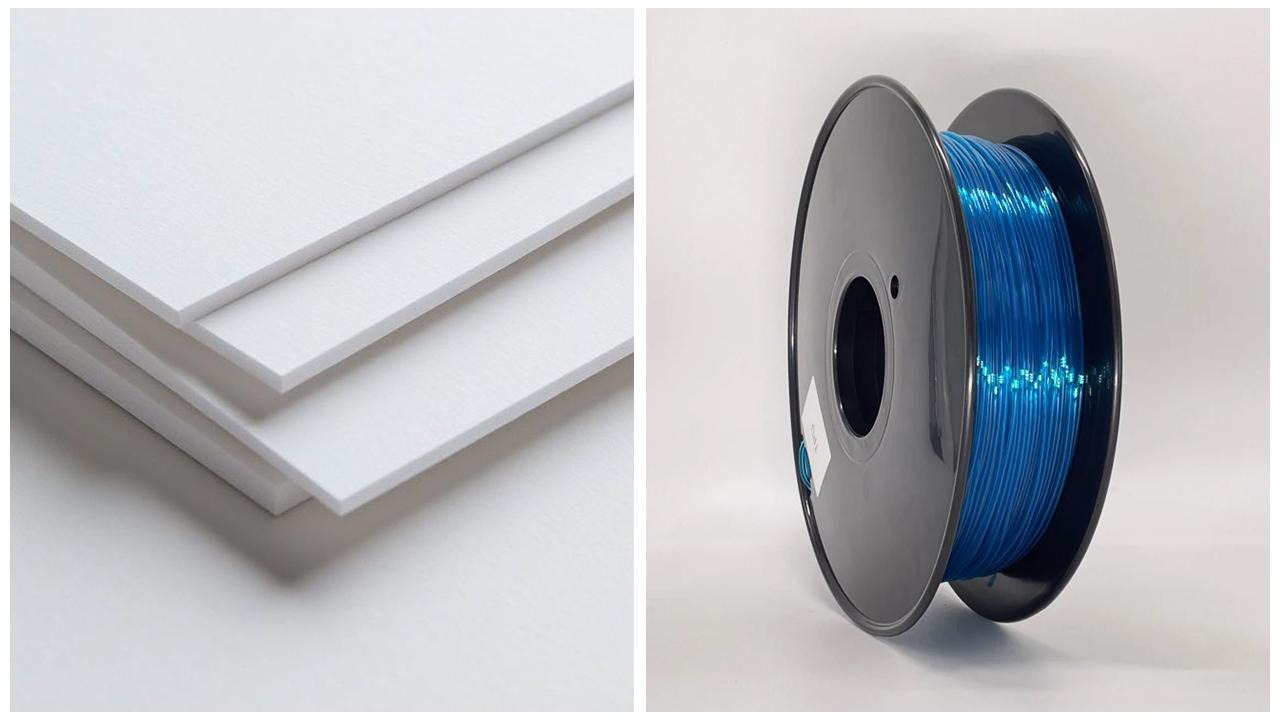
PVC is often the more cost-effective choice for RF welding when material cost, established processing methods, and high-volume production are the main priorities. TPU is often preferred when flexibility, abrasion resistance, mechanical durability, and demanding product performance are more important. Both materials can produce strong, sealed joints when the material grade, tooling, and welding parameters are properly matched.
The best choice depends on the intended application, required seal strength, material thickness, chemical exposure, service life, environmental requirements, and production volume.
PVC stands for polyvinyl chloride. TPU stands for thermoplastic polyurethane. Both are thermoplastic materials, but they have different chemical structures and performance characteristics.
PVC is available in rigid and flexible formulations. Flexible PVC commonly contains plasticizers that make it suitable for films, coated fabrics, and flexible products. Its formulation can be adjusted for different levels of softness, strength, and flexibility.
TPU is a thermoplastic elastomer that combines rubber-like flexibility with thermoplastic processing characteristics. Depending on the grade, it can provide good abrasion resistance, elasticity, tear resistance, and mechanical durability.
For RF welding, the difference is not simply that one material is softer or stronger. Their dielectric properties, melting behavior, formulation, and thickness influence how RF energy is absorbed and how the final weld performs.
| Comparison Factor | PVC | TPU |
|---|---|---|
| Full name | Polyvinyl chloride | Thermoplastic polyurethane |
| RF weldability | Widely used in suitable flexible grades | Suitable grades can be RF welded |
| Material cost | Often lower, depending on grade and market | Often higher, depending on grade and specification |
| Flexibility | Adjustable through formulation and plasticizer content | Typically elastic and flexible, depending on grade |
| Abrasion resistance | Varies by formulation | Often a strong option for demanding wear conditions |
| Mechanical durability | Suitable for many general-purpose applications | Often selected for repeated flexing and demanding mechanical use |
| Material thickness | Requires process adjustment for the actual thickness | Requires process adjustment for the actual thickness |
| Typical applications | Flexible bags, covers, tarpaulins, inflatables | Technical films, inflatable products, flexible components, selected medical products |
| RF process settings | Must be established for the actual grade and tooling | Must be established for the actual grade and tooling |
| Environmental considerations | Recycling and plasticizer requirements depend on formulation and local rules | Recycling and end-of-life options depend on formulation and available systems |
| Cost effectiveness | Often attractive for cost-sensitive production | May offer better lifecycle value in demanding applications |
This table provides general guidance rather than a universal material ranking. Actual performance depends on the specific material grade, product design, and operating conditions.
PVC is one of the most established materials used in RF welding. Flexible PVC films and coated fabrics are widely used in applications that require sealed seams, controlled weld shapes, and repeatable production.
Established RF welding performance: Suitable flexible PVC formulations generally respond well to RF energy, making them practical for many industrial sealing applications.
Flexible formulation options: Manufacturers can select PVC grades with different levels of softness, thickness, and mechanical properties.
Cost effectiveness: PVC is often an economical choice when the application does not require the higher mechanical performance offered by some TPU grades.
Production suitability: PVC can be processed using manual, semi-automatic, and automatic RF welding equipment, depending on the product and required output.
Design flexibility: RF welding can create straight seams, curved patterns, shaped seals, and combined welding and cutting operations with suitable tooling.
PVC is used in products such as:
The application must determine the PVC formulation. A grade intended for a general-purpose cover should not automatically be used for a medical product or an application involving prolonged chemical exposure.
When RF welding PVC, pay attention to:
If the material overheats, the weld may develop flash, discoloration, deformation, or other defects. If the energy input is insufficient, the seam may have low strength or incomplete fusion.
The objective is to establish a stable process window that produces the required seal strength without damaging the surrounding material.
TPU is used in applications where flexibility must be combined with mechanical performance. Suitable TPU grades can be RF welded, but their processing behavior varies by formulation.
Abrasion resistance: Many TPU grades perform well in applications involving rubbing, wear, or repeated contact.
Elasticity and flexibility: TPU can suit products that bend, stretch, or deform during use.
Mechanical durability: Depending on the grade, TPU can provide good tear resistance and resistance to repeated flexing.
Application versatility: TPU films and coated fabrics are used in technical products, inflatable structures, and selected medical and industrial applications.
Potential lifecycle benefits: When a TPU grade lasts longer in a demanding application, it may reduce replacement frequency. Whether this offsets its initial material cost must be evaluated for the actual product.
Suitable TPU grades may be used for:
Medical suitability is not determined by polymer type alone. The selected grade, additives, biocompatibility requirements, manufacturing process, and applicable regulatory requirements must all be assessed.
TPU should be evaluated using the actual grade and product construction. Important factors include:
Do not assume TPU always needs higher RF power or longer welding time than PVC. The appropriate settings depend on the grade, thickness, machine frequency, tooling, and other process conditions.
A process developed for one TPU film may not transfer directly to a different TPU grade, even when the two products have similar appearances.
RF welding uses high-frequency electromagnetic energy to generate heat within compatible thermoplastic materials. The material's dielectric response determines how effectively that energy is converted into heat.
PVC and TPU can both respond to the RF field, but their dielectric properties are not identical. Formulation, additives, moisture, temperature, and material thickness can affect their response.
This means that switching from PVC to TPU may require a new process-development trial rather than simply loading a different material into the same production setup.
A practical process-development sequence is:
The final process window should be documented for each approved material construction.
Material thickness affects the electric field, heat generation, pressure distribution, and final weld profile. Even when PVC and TPU are both suitable for RF welding, they may require different process conditions at the same nominal thickness.
Thin materials can be sensitive to excessive energy or localized electric-field concentration. Thicker materials may require a different energy input and longer process stages, depending on their dielectric and thermal properties.
Multilayer constructions add another variable. A product may include a thermoplastic film, a coating, reinforcement, printing, or an adhesive layer. The behavior of the complete stack may differ from that of a single-layer sample.
For reliable results:
Neither PVC nor TPU is automatically the stronger choice in every RF welding application.
The strength of the finished joint depends on the material grade, welding parameters, electrode design, joint geometry, cooling, and the type of test used. A material with excellent tensile or tear properties can still produce a weak weld if the process is not properly controlled.
Material compatibility: The layers must be compatible with the selected welding process and each other.
RF energy: Too little energy can result in incomplete fusion; excessive energy can damage the material.
Pressure: Pressure must support intimate contact without causing excessive thinning or material displacement.
Weld width: The joint geometry must provide sufficient bonded area for the expected loads.
Cooling: The joint needs suitable conditions to stabilize before pressure is released.
Material consistency: Variations between material lots can change welding behavior.
Select tests based on the product's intended use. Depending on the application, these may include peel testing, tensile testing, burst testing, leak testing, or repeated-flexing tests.
For fluid-containing products, a visually uniform seam does not by itself establish leak integrity. For products exposed to cyclic loading, testing should reflect the expected service conditions.
Record the test method, sample count, acceptance criteria, and results so that the selected PVC or TPU construction can be evaluated consistently.
PVC and TPU may both be considered for medical applications, but the appropriate material depends on the device's function, contact conditions, required performance, and regulatory requirements.
Suitable PVC grades have a long history of use in medical bags and fluid-handling products. They can be processed into flexible films and welded seams, making them useful for products that require containment and reliable sealing.
However, the formulation must meet the requirements of the intended medical application. Plasticizer selection, chemical compatibility, extractables and leachables, sterilization compatibility, and other product-specific requirements may need evaluation.
Suitable TPU grades can be considered where flexibility, abrasion resistance, elasticity, or mechanical durability is required.
The choice should be based on the specific medical-grade material and its documented performance. TPU is not automatically more suitable for medical use simply because it has certain mechanical advantages.
For both materials, manufacturers should verify:
A high-quality weld is only one part of the complete product qualification process.
Material price is an important purchasing factor, but it does not represent the full cost of manufacturing a finished product.
PVC is often a cost-effective choice for high-volume products when its performance meets the application requirements. TPU may have a higher initial material cost in some markets, but it can offer value when improved durability or resistance to wear reduces product replacement or warranty costs.
Compare the complete cost rather than evaluating the price per kilogram alone.
For example, a low-cost PVC construction may be the better choice for a disposable or short-service-life product. A suitable TPU construction may be more economical over the product's lifecycle if the application involves repeated flexing or significant abrasion.
The correct choice depends on measured production data and actual operating requirements.
Neither material can be described as universally more environmentally friendly without considering its formulation, manufacturing process, service life, and end-of-life options.
PVC's environmental profile depends on factors such as plasticizer and stabilizer selection, production methods, product lifetime, and available collection and recycling systems. Some applications may face specific restrictions or customer requirements related to particular PVC formulations or additives.
TPU also has environmental considerations. Recycling options depend on the chemistry of the grade, product construction, contamination, local infrastructure, and whether the material is part of a multilayer or reinforced assembly.
When evaluating environmental performance, consider:
The best choice is the material that meets the technical and regulatory requirements while minimizing the overall environmental impact for the intended application. Where sustainability is a purchasing requirement, request documented information from the material supplier instead of relying on broad claims.
RF welding and heat sealing can both join thermoplastic films, but they use different heating mechanisms.
RF welding generates heat within suitable materials through an alternating electromagnetic field. Heat sealing normally transfers heat from heated tooling or another external heat source into the material.
| Factor | RF Welding | Heat Sealing |
|---|---|---|
| Heating method | Internal dielectric heating | Heat transferred from an external source |
| Material requirements | Requires suitable dielectric properties | Depends on the material's response to external heating |
| Tooling | RF electrodes and suitable insulation arrangements | Heated bars, plates, or other sealing tools |
| Process variables | RF energy, time, pressure, cooling, tooling | Temperature, time, pressure, cooling |
| Applications | Suitable PVC, TPU, and other compatible thermoplastics | A broader range of heat-sealable films, depending on construction |
| Material selection | Must be verified for RF compatibility | Must be verified for heat-sealing compatibility |
Neither method is automatically better for every product. The choice depends on material compatibility, seal geometry, required strength, output, equipment investment, and quality requirements.
Use the following decision process to narrow down the options.
A controlled comparison using production-representative samples is more reliable than selecting a material based on general descriptions alone.
After choosing a material, the next task is to make the welding process repeatable.
A documented production setup should identify the approved material grade, thickness, electrode drawing, machine settings, inspection criteria, and testing requirements.
Before releasing production, verify that:
For high-volume manufacturing, monitor trends in scrap, cycle time, seal strength, and leakage results. A change in these measurements may indicate material variation, tooling wear, or process drift.
Neither material is universally better. PVC is often attractive for cost-sensitive flexible products, while TPU may be preferred for applications requiring greater abrasion resistance, elasticity, or mechanical durability. The correct choice depends on the material grade, product requirements, and validated welding performance.
Yes. Suitable TPU grades can be joined using RF welding. However, TPU formulations vary, so the exact grade, thickness, tooling, and process parameters should be tested before production.
Suitable flexible PVC formulations respond well to RF energy and can produce repeatable sealed joints with appropriately designed electrodes and controlled process settings. PVC is also available in a wide range of flexible films and coated fabrics.
Not in every case. RF energy requirements depend on the exact polymer formulation, dielectric properties, material thickness, machine frequency, tooling, and process conditions. Establish settings through controlled trials rather than assuming one material always requires more energy.
The result depends on the material grade, joint geometry, welding conditions, and test method. Neither material guarantees a stronger seam by itself. Verify seal strength using the test method and acceptance criteria appropriate for the product.
Direct RF welding should not be assumed to work simply because both materials can be RF welded separately. The specific grades and interface must be compatible. Conduct material-combination trials and test the resulting joint before using it in production.
Not universally. Environmental performance depends on formulation, production impacts, product lifetime, recycling availability, and end-of-life treatment. Compare documented data for the specific materials and product construction.
RF welding can be suitable for compatible PVC and TPU materials because heat is generated within the material. Heat sealing may be preferable for other constructions or where the material responds well to externally applied heat. The decision depends on the application, process capability, and quality requirements.
Suitable grades of both materials may be used in selected medical applications. The material must meet the product's chemical, mechanical, biocompatibility, sterilization, and regulatory requirements. The finished product and manufacturing process require appropriate validation.
Material thickness influences field distribution, heat generation, pressure requirements, and the final weld profile. Different thicknesses may require different process settings, even when the polymer family remains the same.
Use approved material specifications, maintain electrode alignment and condition, control RF energy and pressure, establish suitable cooling conditions, and verify seal strength. Documented procedures and routine quality checks help maintain repeatability across production runs.
PVC and TPU are both useful materials for RF welding, but they suit different combinations of cost, durability, flexibility, and application requirements.
PVC is often a practical, cost-effective choice for flexible films, medical bags, covers, and general-purpose sealed products. TPU is worth considering when the product needs a suitable combination of flexibility, abrasion resistance, and mechanical durability. These are general selection guidelines, not guarantees of performance for every grade.
Before selecting a material for production, confirm its RF compatibility, review the material thickness and construction, optimize the welding process, and verify the finished joint through appropriate testing. Evaluating material cost alongside cycle time, scrap, service life, and regulatory requirements provides a sounder basis for choosing between PVC and TPU.
For manufacturers, the goal is not simply to find a plastic that can be RF welded. It is to select a material and process combination that consistently meets the finished product's performance, cost, and quality requirements.