For cooperation and more details, feel free to email us or call directly for consultation.

Home > News & Blog > Knowledge > Which Plastics Can Be RF Welded? PVC, TPU, PU and Material Compatibility
The plastics most commonly suitable for RF welding are polar thermoplastic materials, especially flexible PVC, polyurethane (PU), and thermoplastic polyurethane (TPU). Other materials, including EVA, PET/PETG, nylon, and some ABS formulations, may also be compatible under specific conditions. Standard polyethylene (PE), polypropylene (PP), PTFE, polystyrene, and polycarbonate are generally not suitable for conventional RF welding because they do not absorb RF energy efficiently enough to generate the heat required for fusion.
Material compatibility depends on more than the polymer name. Formulation, plasticizer content, thickness, coatings, fillers, dielectric properties, and the specific material combination can all affect welding performance. For production runs, manufacturers should test the actual material grade and construction rather than relying only on a general statement that a polymer is “RF weldable.”
RF welding, also called radio frequency welding, high-frequency welding, or dielectric welding, joins compatible thermoplastic materials by using an alternating electromagnetic field to generate heat within the material. The heat comes from dielectric losses as polar molecules respond to the high-frequency field. Pressure is applied through the tooling while the heated polymer softens and fuses.
This differs from conventional thermal sealing methods, where heat is transferred to the material from a heated surface or another external source.
The important point is that not every thermoplastic can be RF welded. The material needs electrical and thermal characteristics that allow it to absorb the electromagnetic field and reach a suitable welding temperature without excessive dielectric breakdown or degradation.
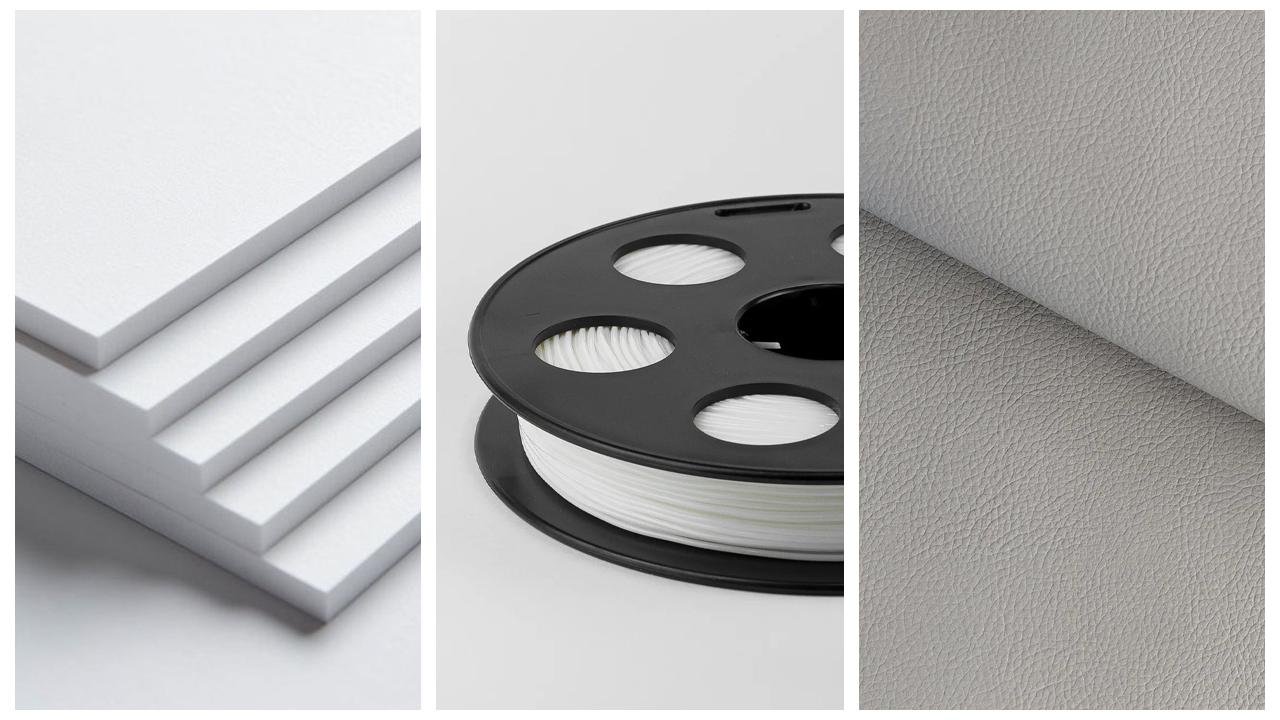
The ability of a polymer to respond to radio frequency RF energy is closely related to its molecular structure.
When a suitable material is exposed to a high-frequency alternating electric field, molecular dipoles attempt to orient themselves with the changing field. Molecular movement and dielectric losses convert part of the electromagnetic energy into heat. This heat develops within the material rather than being transferred only from its surface.
This is why polar thermoplastics tend to be better candidates for RF welding.
A material's RF behavior is also influenced by factors such as:
As a result, two films made from the same general polymer family can have different welding windows.
| Plastic | Conventional RF Welding | Typical Considerations |
|---|---|---|
| Flexible PVC | Yes | One of the most widely used RF welding materials |
| PU | Yes, depending on formulation | Common in flexible and inflatable products |
| TPU | Yes, depending on grade | Useful where flexibility, toughness, and durability are required |
| EVA | Some grades | RF response depends on vinyl acetate content and formulation |
| PET / PETG | Some grades | May require specific process conditions |
| Nylon | Some grades | Often requires additional process conditions such as preheating |
| ABS | Some formulations | RF response varies by formulation |
| PE | Generally no | Standard grades are non-polar and poorly responsive to RF energy |
| PP | Generally no | Standard grades are non-polar |
| PTFE | Generally no | Poor candidate for conventional RF welding |
| PC | Generally no | Normally not compatible with conventional RF welding |
| PS | Generally no | Normally not suitable |
This table is a starting point rather than a substitute for material testing. TWI notes that PVC and polyurethanes are among the most common RF-welded thermoplastics, while nylon, PET, EVA, and some ABS resins can require special conditions.
Polyvinyl chloride (PVC) is one of the best-known materials for RF welding and has been used extensively for films, flexible products, medical products, packaging, and inflatable structures.
Flexible PVC responds well to RF energy because its formulation can provide the dielectric properties needed for internal heating. Plasticizers can also affect its dielectric behavior and welding response.
PVC offers several practical characteristics for RF welding:
PVC can be used for products such as:
However, “PVC” alone does not define a complete welding specification. Plasticizer level, additives, thickness, surface treatment, and other formulation details can change the process window.
If a PVC film produces inconsistent welds, investigate the material before assuming that the RF welding machine is at fault.
Check:
For repeatable production runs, maintaining a controlled material specification is especially useful.
Thermoplastic polyurethane (TPU) is another important material for RF welding. TPU combines flexibility with mechanical strength and is available in many grades designed for different applications.
TPU is used in products where flexibility, abrasion resistance, elasticity, and sealed construction are needed. RF welding of TPU-coated fabrics has also been studied at high frequency, demonstrating the importance of the material's dielectric properties and temperature behavior during welding.
TPU can be found in applications such as:
TPU is not a single material formulation. Different grades can vary in hardness, chemistry, thickness, additives, and dielectric characteristics.
Therefore, a TPU film that welds successfully on one RF welding machine should not automatically be assumed to have identical behavior on another machine.
For a new TPU grade, test:
The production specification should be based on the actual material and product construction.
Polyurethane (PU) is commonly associated with RF welding because suitable polyurethane formulations contain polar groups that respond to the electromagnetic field.
PU materials are used in flexible products, coated fabrics, inflatable structures, and other applications where a durable sealed seam is required.
However, PU is a broad material family. Not every polyurethane formulation will have the same RF response.
When evaluating PU, obtain the supplier's material data and confirm:
If the PU is part of a coated fabric, the RF weld generally depends on the weldable coating layer rather than the reinforcement fabric itself.
Some ethylene-vinyl acetate (EVA) formulations can be RF welded. Its suitability depends significantly on formulation, especially the vinyl acetate content and resulting dielectric behavior.
EVA has been identified among thermoplastic materials that can respond to RF welding, although the processing window may differ considerably from PVC.
For EVA, manufacturers should establish the appropriate RF energy, pressure, welding time, and cooling conditions through material-specific trials.
Some PET-family materials, particularly certain PETG formulations, can be used with high-frequency welding under suitable conditions. TWI notes that PET and nylon can require special conditions, such as preheated welding bars, in addition to RF power.
This means PET/PETG should not be treated as universally RF weldable.
Before selecting RF welding for a PET-based product, test the exact grade and thickness. If the material requires additional heating, the machine and tooling need to be designed around that process.
Some nylon materials can respond to RF energy, but nylon is generally more process-sensitive than flexible PVC.
Material condition and temperature can have a substantial effect on the result. Published technical references identify nylon as a material that may be RF welded with special conditions, including preheating in some applications.
For nylon, process development should therefore include material conditioning, preheating requirements, RF settings, pressure, and cooling.
Standard PE is generally considered unsuitable for conventional RF welding because its molecular structure does not provide the required dielectric response.
Standard PP is also a non-polar polyolefin and normally does not absorb RF energy effectively enough for conventional dielectric welding.
PTFE has very low RF loss and is generally not a practical material for conventional RF welding.
Standard PC is normally not considered compatible with conventional RF welding.
PS generally lacks the dielectric behavior required for efficient conventional RF welding.
Technical references consistently identify standard PE and PP, along with materials such as PTFE, PC, and PS, as poor candidates for conventional RF welding.
A common misconception is that any plastic film can be joined using RF welding.
In reality, conventional RF welding depends on the material converting electromagnetic energy into heat. Standard PE and PP have relatively low RF loss, so they do not heat efficiently in the RF field.
For these materials, manufacturers may consider alternatives such as:
The appropriate method depends on product geometry, material thickness, required seal strength, production volume, and environmental conditions.
There are also specially engineered RF-weldable polyolefin systems and constructions that modify the material's RF response. Such products should be evaluated according to their supplier's specifications rather than treated as equivalent to standard PE or PP.
RF welding does not necessarily require two identical layers, but the material combination must be compatible with the process.
For example, a product may contain:
The important question is whether the layers at the intended weld area can soften and fuse under the RF process.
A fabric reinforcement may provide mechanical support while the thermoplastic coating forms the actual RF weld.
Material thickness changes the electrical field distribution and heating behavior.
Very thin films can be sensitive to excessive RF energy because a small increase in energy may produce overheating or localized damage. Thicker constructions may require different energy and pressure conditions.
For multilayer materials, consider the complete stack rather than evaluating each layer independently.
For example:
Layer 1: PVC film
Layer 2: Printed coating
Layer 3: Reinforcement
Layer 4: PVC film
The actual RF response depends on the combined construction and on which layers are present within the weld zone.
Material selection has a direct relationship with seal strength, but a weldable material does not automatically produce a strong weld.
Final joint performance depends on:
A material may be highly RF responsive but still produce a poor joint if the process overheats it, compresses it excessively, or releases pressure before the weld has cooled sufficiently.
For demanding products, evaluate seal strength using a defined test method rather than judging quality from appearance alone.
The polymer name is only one part of the material specification.
Additives can change the electrical and thermal behavior of a film. Examples include:
This is particularly relevant to PVC. A flexible PVC film with one formulation may have a different RF welding window from another PVC film with a different plasticizer system.
Therefore, material approval should identify the actual commercial grade or formulation whenever possible.
Before committing to large production runs, perform material compatibility testing with production-representative samples.
A practical test sequence includes:
Record the manufacturer, grade, thickness, construction, and material lot.
Use the same film, coating, reinforcement, and layer arrangement planned for production.
Test RF energy, welding time, pressure, and cooling conditions systematically.
Look for:
Use an appropriate peel, tensile, burst, or other test method based on the product.
For inflatable or fluid-containing products, visual inspection is not sufficient to establish leak performance.
Run enough samples to determine whether the process remains stable rather than approving a material based on one successful weld.
The choice should start with the product's performance requirements rather than the welding method alone.
The final decision should consider chemical resistance, temperature range, mechanical requirements, regulatory requirements, durability, cost, and RF weldability together.
If a material is almost suitable but produces inconsistent RF welds, consider whether the problem is actually related to material formulation or construction.
Possible approaches include:
Special material systems can sometimes make otherwise difficult plastics suitable for dielectric welding, but these solutions require engineering validation.
Before approving a new material for RF welding, confirm:
Polymer type
Exact material grade
Material thickness
Layer construction
Dielectric properties where available
Softening or melting behavior
RF frequency compatibility
Electrode design
Required RF energy
Required pressure
Welding time
Cooling time
Required seal strength
Leak requirements
Appearance requirements
Production cycle requirements
Applicable product or regulatory requirements
The most common RF-weldable plastics include flexible PVC, PU, and TPU. Some EVA, PET/PETG, nylon, and ABS formulations can also be RF welded under suitable conditions. Material formulation and thickness must be considered before production approval.
Yes. Flexible PVC is one of the most widely used materials for RF welding because it responds efficiently to RF energy and can form strong sealed joints when the material and process are properly matched.
Yes, many TPU grades are suitable for RF welding. However, TPU formulations differ, so the exact grade, thickness, and construction should be tested before a production run.
Suitable polyurethane materials can be RF welded. PU is commonly used in flexible films and coated fabrics, but its RF response depends on formulation and construction.
Standard polyethylene is generally not suitable for conventional RF welding because it has low RF absorption. Alternative joining methods or specially engineered RF-compatible materials may be considered.
Standard polypropylene is generally not compatible with conventional RF welding because it is a non-polar polymer. Special RF-weldable constructions may be available, but they must be evaluated separately.
In industrial manufacturing, RF welding, radio frequency welding, high-frequency welding, and dielectric welding commonly refer to the same general joining technology. The process uses a high-frequency electromagnetic field to heat compatible dielectric thermoplastics.
No. RF welding has a relatively narrow material compatibility range. Materials need suitable dielectric properties to absorb RF energy and generate enough heat for fusion.
PVC has favorable dielectric characteristics for RF heating and is available in many flexible film and coated-fabric formulations. Its widespread industrial use has also resulted in extensive experience with RF tooling and process development.
Thickness changes the RF field distribution, heating behavior, pressure requirements, and process window. A setting developed for a thin film should not automatically be transferred to a thicker construction.
Some compatible dissimilar materials can be joined, but the interfaces must have suitable RF and thermal characteristics. The exact material combination should be tested rather than assumed to be compatible.
Ask the material supplier for relevant RF/dielectric information and perform welding trials using production-representative samples. Evaluate appearance, seal strength, leakage where applicable, and repeatability across multiple samples.
Yes. Compatible thermoplastic materials can produce strong and sealed joints when material selection, RF energy, pressure, tooling, and cooling are properly controlled. The required seal strength should always be verified through product-specific testing.
The answer to which plastics can be RF welded starts with molecular polarity and dielectric behavior. Flexible PVC, TPU, and suitable PU formulations are among the most widely used materials, while EVA, PET/PETG, nylon, and certain other polymers can work under specific conditions. Standard PE, PP, PTFE, PC, and PS are generally poor candidates for conventional RF welding.
For manufacturers, material compatibility should be established using the actual grade, thickness, layer construction, and production conditions. A material that performs well in a laboratory trial may behave differently after formulation changes, coating changes, or a change in thickness.
For consistent RF sealing and reliable seal strength, evaluate the material together with RF energy, electrode design, pressure, welding time, and cooling. This approach gives manufacturers a more reliable basis for selecting materials and preparing RF welding machines for repeatable production runs.