For cooperation and more details, feel free to email us or call directly for consultation.

Home > News & Blog > Blog > RF Welding Automation Systems
RF welding automation systems use radio frequency energy, controlled pressure, and automated machine operations to join compatible thermoplastic materials with repeatable seam quality. Also known as high frequency welding or dielectric welding systems, they are used in manufacturing applications that require consistent bonding, defined weld patterns, and reliable production cycles.
Shanghai Junjingsai Automation Machinery Co., Ltd. has specialized in radio frequency welding equipment since 2002. HFWelders provides RF welding machines and customized automation solutions for manufacturers working with flexible thermoplastics, coated materials, and multilayer components. Depending on the product and production requirements, systems can include automatic material positioning, programmable welding sequences, custom electrodes, part handling, and process monitoring.
For manufacturers considering automated plastic welding, the right system depends on material compatibility, product geometry, welding requirements, target output, and the level of automation needed.
RF welding automation systems are industrial welding solutions that use high-frequency electromagnetic energy to generate heat inside compatible thermoplastic materials while coordinating material positioning, pressure application, welding time, and part handling through automated or semi-automated controls.
RF welding, also known as high frequency welding, radio frequency welding, or dielectric welding, uses an alternating electromagnetic field to generate heat within suitable polar materials. Pressure brings the material layers together, allowing them to bond as the joint cools under appropriate conditions.
Unlike conventional welding methods that rely on a heated tool or mechanical vibration, RF welding utilizes high frequency electromagnetic energy to generate heat through dielectric losses in compatible materials. The process can be applied to selected PVC formulations and certain other RF-weldable thermoplastics.
An RF welding automation system combines this welding technology with production equipment and controls. Depending on the application, automated machines may perform material loading, positioning, welding, cooling, unloading, and inspection-related operations. The exact configuration depends on product design, process validation requirements, and production volume.
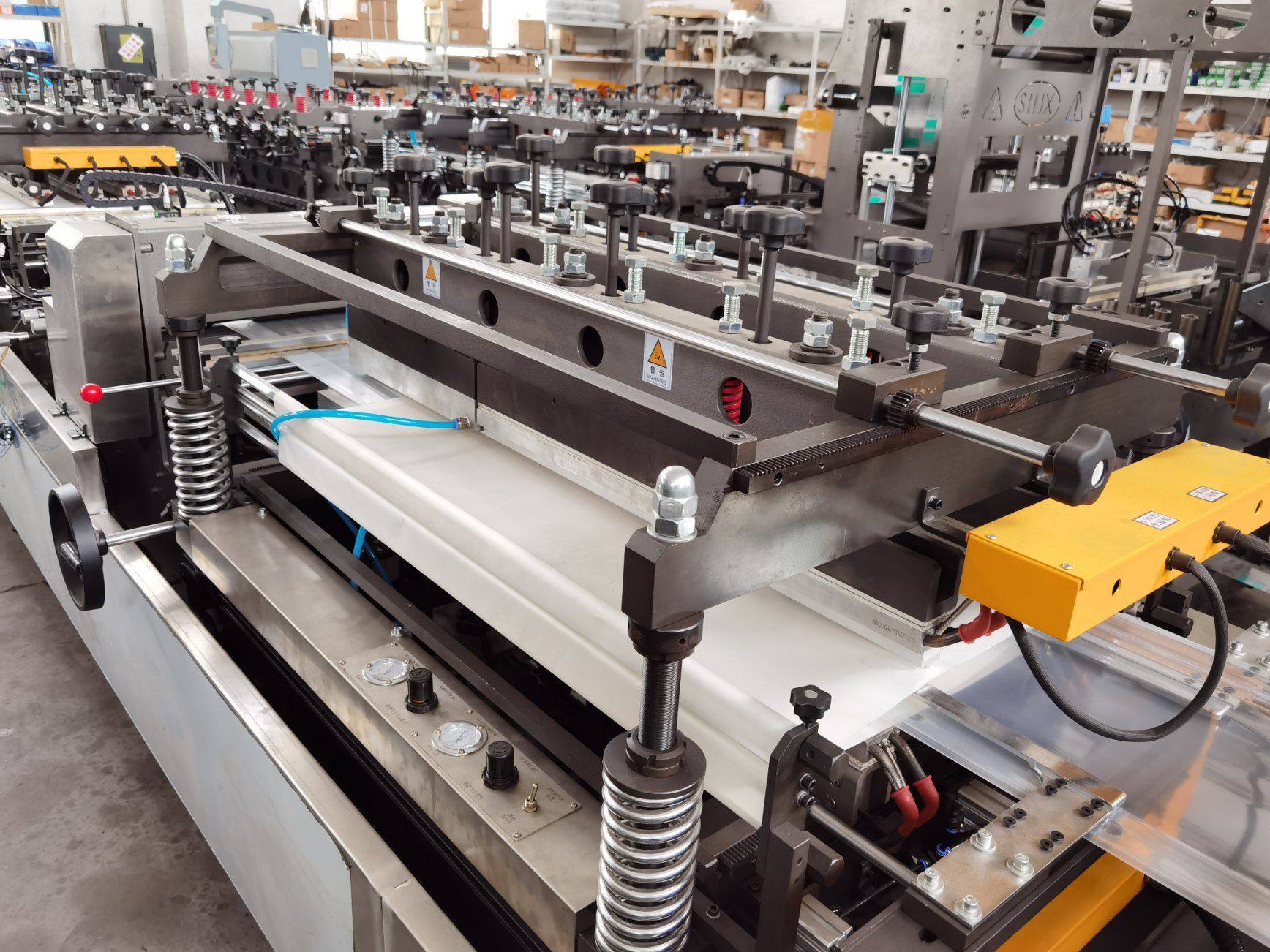
The welding process combines material preparation, electromagnetic heating, pressure, and controlled cooling. Automation coordinates these steps to improve repeatability and reduce unnecessary manual handling.
Operators or automated handling equipment place the components in the welding area. Fixtures, sensors, and positioning systems can help align thin plastic sheets, coated fabrics, or multilayer components before welding begins.
Accurate positioning helps maintain the intended seam location and reduces variation caused by inconsistent material overlap or placement.
The RF generator supplies electrical energy to the electrodes, creating a high-frequency electromagnetic field across the welding area. In compatible polar thermoplastics, the field causes molecular movement and dielectric losses that generate heat within the material.
The molecular structure and dielectric properties of the material influence how it responds to the field. Material formulation, thickness, coatings, and layer arrangement must therefore be considered when establishing the process.
Once the material reaches the required welding condition, the machine applies pressure through the electrodes. The material layers bond across the intended seam area.
Automated systems can coordinate energy application and pressing sequences according to established process settings. Consistent tooling and material positioning help maintain the required weld geometry.
The welded joint is allowed to cool under suitable conditions before the machine releases the part. Cooling requirements depend on the material, thickness, seam design, and production cycle.
In automated production, the release sequence can be integrated with part handling to prepare the next cycle while maintaining the required process order.
Depending on the system configuration, sensors, control software, and inspection equipment can help monitor process conditions or identify handling problems. Product-specific testing may still be needed to verify seam strength, leakage resistance, dimensional accuracy, or other performance criteria.
Automation improves process consistency when it is built around a validated welding method and appropriate quality controls. It does not replace material testing or finished-product inspection.
An automated RF welding system combines the welding machine with the tooling, controls, and handling equipment required for a particular manufacturing process.
The RF generator supplies the high-frequency electrical energy used to create the electromagnetic field. Generator capacity and control characteristics must match the material, electrode area, product geometry, and intended production cycle.
The press applies the required force, while the electrodes define the welding area and seam pattern. Custom electrodes may be designed for straight seams, curved outlines, shaped components, or repeated weld locations.
Depending on the application, handling equipment may include loading fixtures, pneumatic mechanisms, robotic arms, conveyors, or automatic unloading systems. The choice depends on product size, part complexity, cycle time, and the required degree of automation.
The control system coordinates machine movements and welding sequences. Depending on the equipment, it may manage RF energy, welding time, pressing sequences, cooling time, interlocks, and production-cycle information.
Fixtures keep the material or component in the correct position during welding. For products with complex shapes or multiple seam locations, custom fixtures can reduce handling variation and support repeatable production.
Automated equipment should incorporate suitable guarding, electrical protection, emergency-stop functions, and other safety measures appropriate to the machine design. Installation, operation, and maintenance should follow the manufacturer's instructions and applicable workplace requirements.
Automated machines can apply consistent sequences for positioning, pressing, energy application, and release. Once the process has been properly developed, controlled machine cycles can reduce variation associated with manual operation.
Automatic loading, positioning, and unloading can reduce repetitive handling and improve material flow. The degree of benefit depends on the product design and how the welding station fits into the wider production line.
For stable, repeatable products, automation can help manufacturers achieve more predictable cycle times and organize production around defined output targets. Actual capacity depends on welding time, cooling, handling, inspection, and equipment availability.
Custom electrodes and fixtures can maintain the intended weld location and shape across repeated cycles. This is useful when products require defined seam widths, repeated patterns, or multiple welding points.
RF welding automation systems can be designed to work with upstream material preparation and downstream assembly, inspection, or packaging operations. Integration should account for part orientation, transfer time, control interfaces, and production-line layout.
Where the system supports data collection, selected process settings, cycle counts, alarms, and inspection results can be recorded. These records can help manufacturers investigate process variation and maintain production documentation.
RF welding automation can support industries that manufacture products from compatible thermoplastic materials. Application suitability must be confirmed for the specific material and component structure.
The medical industry uses various flexible thermoplastic products, including selected medical bags, fluid containers, and flexible components. RF welding may be suitable for compatible materials where repeatable seams and defined sealing patterns are required.
Automated RF welding machines can coordinate positioning, welding, and handling for repeat production. Medical applications may also require documented process validation, cleanliness controls, traceability, and product-specific testing. The use of RF welding alone does not establish that a finished product meets medical safety or regulatory requirements.
Selected inflatable products, including air mattresses, inflatable pools, and certain boat components, use flexible materials that may be suitable for RF welding. Automation can help control seam placement and production sequences across repeated components.
Leak testing and seam-strength testing should be defined according to the product's intended operating conditions.
Certain automotive interior components, flexible covers, and trim assemblies use compatible thermoplastic layers. Automated RF welding can help maintain consistent seam positions and repeatable cycle sequences.
Tooling and automation should be designed around the part geometry, material properties, surface appearance, and required production output.
Some flexible packaging structures and coated materials can be RF welded when their composition supports dielectric heating. Multilayer products require particular attention because adhesives, barrier films, reinforcements, and coatings can affect weld formation.
Manufacturers should verify material compatibility before designing an automated production process.
RF welding is one of several welding methods used for thermoplastic components. Each method has different material requirements, heat-generation mechanisms, tooling needs, and application limits.
| Welding method | How it works | Common considerations |
|---|---|---|
| RF welding / dielectric welding | Uses high-frequency electromagnetic energy to generate heat within compatible polar materials | Suitable for selected thermoplastics and shaped flexible seams |
| Ultrasonic welding | Uses high-frequency mechanical vibration and pressure to generate heat at the joint | Often used for compatible rigid or semi-rigid components and specific joint geometries |
| Hot-bar heat sealing | Transfers heat from a heated tool to the material surfaces | Suitable for materials that can be thermally sealed using controlled temperature and pressure |
| Hot-air or hot-wedge welding | Applies heat to the joining surfaces before pressure forms the joint | Common for certain thermoplastic-coated fabrics and continuous seams |
Ultrasonic welding and RF welding are different technologies. Although both use high-frequency energy in a broad sense, ultrasonic welding relies on mechanical vibration, while RF welding uses an electromagnetic field to produce dielectric heating.
The most suitable plastic welding process depends on material compatibility, joint design, product size, required performance, cycle time, and production economics.
A suitable system should be designed around the product and the full manufacturing process rather than selected by generator power alone.
Identify the exact thermoplastic grade, material thickness, coatings, reinforcement, and layer structure. PVC is commonly used in RF welding, but not every plastic or PVC formulation behaves identically. Other materials should be evaluated through sample trials.
Provide component drawings, seam dimensions, welding locations, and any restrictions on appearance or deformation. These details guide the selection of electrodes, fixtures, press dimensions, and material-handling arrangements.
Estimate the required output per shift, target cycle time, product mix, and expected changeover frequency. The complete cycle includes positioning, welding, cooling, release, and any inspection or handling operations.
Manual, semi-automatic, and fully automated configurations serve different production needs.
Full automation is not automatically the best choice for every application. Product variation, tooling changes, maintenance capability, and return on investment should be considered.
Define how the finished weld will be assessed. Depending on the product, criteria may include seam strength, leakage performance, dimensional consistency, appearance, and durability.
Use representative samples to develop the process and establish suitable acceptance criteria before full production.
Check available floor space, utilities, part-transfer requirements, control interfaces, operator access, and maintenance procedures. A system that fits the existing production layout can be easier to commission and operate.
The quality of an RF weld depends on material properties, machine settings, tooling, and production consistency. Common factors include:
If weak seams, burn marks, irregular seal widths, or leakage occur, manufacturers should investigate the material and process conditions before changing individual settings. A controlled test plan can help identify the cause without introducing new defects.
Shanghai Junjingsai Automation Machinery Co., Ltd. has specialized in radio frequency welding equipment since 2002. HFWelders develops RF welding machine solutions for industrial applications involving compatible thermoplastic materials.
Automation options can be assessed according to:
To evaluate an RF welding automation system, manufacturers should provide material samples, product drawings, target seam specifications, expected production volume, and the required automation level. These details help establish whether radio frequency welding is suitable and guide the development of a practical machine configuration.
An RF welding automation system combines radio frequency welding equipment with controls, fixtures, and automated or semi-automated handling. It uses high-frequency electromagnetic energy to join compatible thermoplastic materials while coordinating the production cycle.
Yes. RF welding is also known as high frequency welding or dielectric welding. The process uses an alternating electromagnetic field to generate heat within compatible polar thermoplastics, allowing the material layers to bond under pressure.
The RF generator creates a high-frequency electromagnetic field. In compatible materials, the alternating field produces dielectric losses associated with molecular response, generating heat within the material. Pressure and controlled cooling help form the welded joint.
Many PVC formulations and selected other polar thermoplastics can be RF welded. Material suitability depends on its dielectric properties, thickness, coating, and construction. Sample testing is recommended before committing to a production process.
RF welding uses high-frequency electromagnetic energy to generate heat within compatible materials. Ultrasonic welding uses mechanical vibration and pressure to generate heat at the joint. The appropriate method depends on material properties, component geometry, and performance requirements.
They can be used for suitable medical-bag materials when the product design is compatible with RF welding. Medical manufacturing may also require validated processes, documented controls, appropriate cleanliness measures, traceability, and testing against applicable product requirements.
A fully automated system may integrate material loading, positioning, welding, cooling, unloading, and selected inspection or transfer operations. The final configuration depends on product geometry, production volume, cycle-time targets, and integration requirements.
Cycle time depends on material positioning, welding duration, pressure sequence, cooling time, product handling, and inspection requirements. Automation may reduce some handling time, but overall capacity must be evaluated across the complete production cycle.
Yes. Machines can be configured around product dimensions, electrode geometry, material structure, required seal patterns, and production targets. Custom fixtures and handling arrangements may be needed for complex components or automated lines.
Manufacturers should verify material compatibility, standardize positioning, maintain electrodes and fixtures, control the welding process, and monitor production results. Appropriate seam-strength, leakage, or other product-specific tests help confirm that the weld meets the required performance criteria.
Looking for RF welding automation systems for medical bags, flexible components, automotive interiors, inflatable products, or other compatible thermoplastic applications? Contact HFWelders with your material specifications, product drawings, seam requirements, and target output.
The team can review your application and discuss suitable RF welding machines, custom tooling, automation options, and process trials for your production needs.