For cooperation and more details, feel free to email us or call directly for consultation.

Home > News & Blog > Blog > RF Welding Machines for Stationery
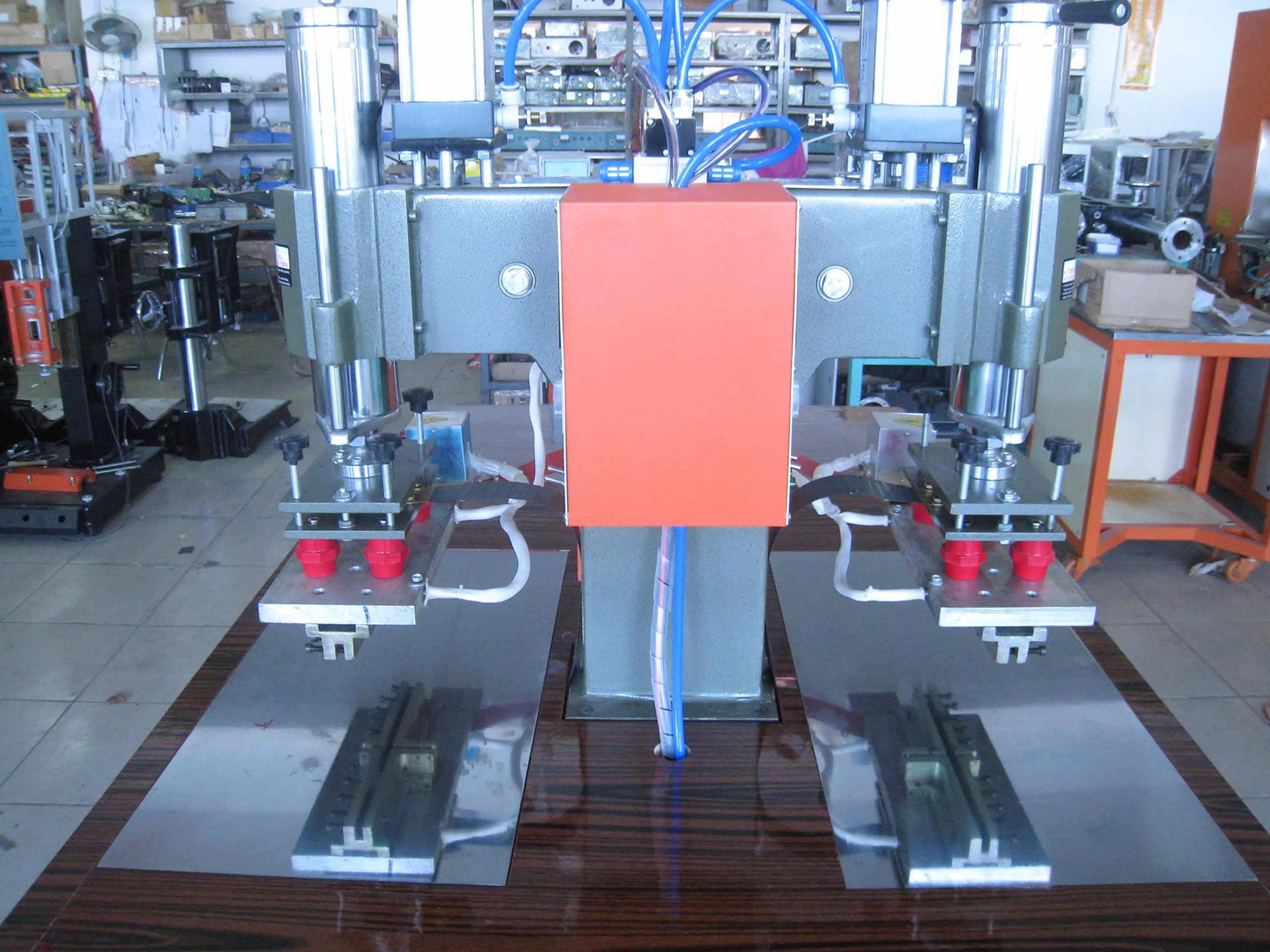
RF welding machines for stationery use high-frequency electromagnetic energy to join compatible thermoplastic materials and create durable, consistent seams. Also known as radio frequency welding or high-frequency welding machines, they can be used to manufacture selected stationery products that incorporate weldable plastic sheets, covers, pockets, sleeves, folders, and other flexible components.
For stationery manufacturers, the suitability of RF welding depends on the material composition, product structure, seam design, and required production output. When the materials are compatible, the process can support repeatable bonding, clean seam formation, and automated manufacturing for high-volume orders.
Shanghai Junjingsai Automation Machinery Co., Ltd., operating through HFWelders, develops RF welding equipment for industrial applications. The company has worked in welding machinery since 2002 and can assess equipment requirements based on product samples, material specifications, and production targets.
RF welding machines for stationery are industrial machines that use a high-frequency electric field to generate heat inside compatible dielectric thermoplastics. The machine applies RF energy and pressure through specially designed electrodes, bonding the material layers together to form a welded seam.
This process is also called dielectric welding or high-frequency welding. Unlike conventional heat sealing, which transfers heat from a heated surface, RF welding generates heat within suitable materials through dielectric losses.
In stationery manufacturing, RF welding may be suitable for selected PVC-based products and other compatible polar thermoplastics. It is not suitable for every plastic, paper, coated board, or laminated stationery material. Material testing is necessary to confirm weldability and determine suitable process parameters.
Stationery products vary in construction, thickness, shape, and intended use. RF welding can be considered when a product includes compatible thermoplastic components that need to be joined without relying on adhesive bonding alone.
Plastic folders and document holders may include welded edges, pockets, transparent windows, or flexible compartments. RF welding can form defined seams between compatible plastic layers, helping create consistent product dimensions and neat edges.
The electrode design should match the required seam layout, including straight edges, corners, and pocket openings. The material must also withstand the selected welding conditions without excessive deformation or surface damage.
Certain PVC stationery covers can be manufactured using RF welding when the material formulation is suitable. The process can join compatible layers around the edges or create shaped sections for specific cover designs.
For products with printed surfaces, decorative films, or laminated finishes, manufacturers should test the complete material structure. Printing inks, coatings, and adhesives within a laminate can affect the welding process and finished appearance.
Transparent document pockets, card holders, badge holders, and selected plastic pouches may use welded seams to secure their edges while leaving the intended opening accessible.
RF welding can support repeatable seam placement for products with consistent dimensions. For pockets requiring transparency, the material and electrode arrangement should be evaluated to reduce unwanted marks, wrinkles, or deformation around the weld.
Some flexible pencil cases, storage sleeves, and stationery accessories incorporate compatible thermoplastic panels. RF welding may be suitable for joining selected seams or forming compartments, depending on the product construction.
Products containing zippers, fabric, metal fittings, or mixed-material components may require additional assembly methods. The equipment configuration should reflect the full manufacturing sequence rather than treating every component as suitable for RF welding.
RF welding can also be considered for custom-shaped covers, organizers, protective sleeves, and other stationery items made from compatible materials. Purpose-designed electrodes can produce repeatable seam patterns and product-specific shapes.
Before production, manufacturers should evaluate the material thickness, seam position, appearance requirements, and ease of removing the finished product from the tooling.
The RF welding process combines electromagnetic energy, pressure, and controlled timing. A typical cycle includes the following steps.
The stationery components are cut to size and positioned between the welding electrodes. Fixtures or alignment guides help keep the layers in the correct position and reduce variation between products.
The RF generator creates a high-frequency electric field across the material in the welding area. Compatible dielectric thermoplastics generate internal heat in response to the field.
The electrodes apply pressure while the material reaches the required welding condition. The softened surfaces bond together to form the seam. RF power, welding time, pressure, and electrode geometry must be adjusted to suit the material and product design.
The welded area stabilizes under suitable conditions before the electrodes release the product. Controlled cooling helps the seam retain its shape and reduces the risk of deformation during removal.
Finished stationery products can be checked for seam continuity, dimensional accuracy, surface appearance, and bond strength. Depending on the product, further steps may include trimming, folding, printing, or assembling accessories.
When used with compatible materials and a suitable process, RF welding offers several potential advantages for stationery production.
Purpose-designed electrodes help produce repeatable seam shapes and widths. Stable process settings can reduce variation between products and support consistent manufacturing quality.
RF welding can create defined edges and bonded areas without requiring a separate adhesive layer at the welded joint. The final appearance depends on the material, electrode surface, tooling condition, and process settings.
Manufacturers producing large quantities of the same folder, cover, pocket, or other compatible stationery product may benefit from repeatable machine cycles and dedicated tooling. The production setup can be designed around the product geometry and expected output.
Depending on product design, RF welding equipment can be configured with positioning fixtures, automatic loading and unloading, or integration with other manufacturing stations. Automation can reduce manual handling and improve cycle consistency.
Different electrode designs can support different seam patterns and product dimensions. For manufacturers handling several product models, the feasibility of interchangeable tooling should be assessed alongside changeover time and process validation requirements.
Not every stationery product requires RF welding. Manufacturers should compare the joining process with the materials, product design, and expected production volume.
RF welding generates heat within compatible dielectric materials through a high-frequency electric field. Heat sealing transfers heat from heated tooling to compatible packaging or product layers.
RF welding may suit certain PVC stationery products and shaped seams. Heat sealing may be preferable for materials that respond well to externally applied heat but are unsuitable for RF welding.
Ultrasonic welding uses mechanical vibrations to generate heat at the joint. RF welding uses a high-frequency electromagnetic field to heat compatible dielectric materials.
The better option depends on material properties, seam geometry, product thickness, appearance requirements, and production targets. Neither process is universally suitable for all stationery materials.
Adhesive bonding can join a wide range of material combinations, including some materials that cannot be RF welded. However, adhesives may introduce curing, application, storage, or cleaning requirements.
RF welding can join compatible thermoplastic layers without adding adhesive to the welded interface. Material compatibility and finished-product performance should be verified before selecting either method.
For stationery factories, high volume production requires consistent quality alongside predictable output. RF welding machines can be configured for repeated production cycles, but actual capacity depends on the product design, welding area, material properties, and handling method.
Cycle times include more than the period when RF energy is applied. A complete cycle may involve loading the material, positioning the components, closing the press, applying RF energy, allowing the seam to stabilize, opening the press, and removing the finished product.
Several factors influence cycle times:
A machine's rated cycle time should not be treated as guaranteed finished-product output. Manufacturers should conduct production trials with representative materials and finished product designs, then measure actual output over a realistic operating period.
Selecting an RF welding machine starts with the product and its manufacturing requirements. The following considerations help establish whether RF welding is suitable and what equipment configuration may be needed.
Identify the polymer type, formulation, thickness, coating, and number of layers. RF welding is commonly used for PVC and selected other polar thermoplastics. Paper, ordinary cardboard, many non-polar plastics, and mixed-material laminates should not be assumed to be RF-weldable.
Provide representative samples so the material structure can be assessed before finalizing the equipment specification.
Prepare drawings showing product dimensions, seam locations, openings, corners, and any areas that must remain unwelded. These details influence electrode shape, fixture design, working area, and positioning accuracy.
Estimate daily and monthly demand, expected shift patterns, product changeover frequency, and desired output. High-volume production may justify dedicated tooling or greater automation, while smaller batches may require more flexible changeover arrangements.
Transparent folders, decorative covers, and printed stationery products may have specific appearance requirements. Test the complete product material to identify potential marking, discoloration, wrinkling, or deformation.
If one machine will process multiple product sizes, assess whether interchangeable electrodes and fixtures can accommodate them. Include tooling replacement, setup adjustments, and validation time in the production plan.
RF welding equipment should have appropriate guarding, interlocks, and operating controls for its configuration. Maintenance requirements may include checking electrodes, fixtures, electrical components, and cooling systems where fitted, according to the manufacturer's instructions.
A repeatable process requires clear acceptance criteria and routine inspection. For stationery products, quality checks may include:
Test methods should reflect the product's intended use. For example, a document holder may require consistent edge bonding and appearance, while a flexible pencil case may need additional checks for seam strength under repeated handling.
A documented production setup can help operators maintain consistent results across batches. When material suppliers or product designs change, the welding process should be reassessed rather than assuming that existing settings will remain suitable.
Shanghai Junjingsai Automation Machinery Co., Ltd. has developed industrial welding machinery since 2002. Through HFWelders, the company provides RF welding equipment and customized solutions for applications involving compatible thermoplastic materials.
For stationery projects, equipment planning should begin with the product structure, material samples, seam layout, appearance requirements, and expected production output. These details help determine whether RF welding is appropriate and whether a manual, semi-automatic, or automated machine configuration should be considered.
Manufacturers can also assess tooling flexibility, cycle times, operator handling, and maintenance access when planning production. A material and product trial provides a practical basis for confirming process feasibility before equipment selection.
Looking for RF welding machines for stationery manufacturing? Share your product drawings, material specifications, samples, required seam details, and production targets with HFWelders.
The team can review the application, assess material compatibility, and discuss a suitable machine and tooling configuration. Final equipment selection should be based on verified welding results and realistic production requirements.
RF welding machines can join compatible thermoplastic components used in selected stationery products, including plastic folders, document pockets, PVC covers, sleeves, and flexible organizers. The application depends on material compatibility and the required seam design.
RF welding is commonly used with PVC and selected other polar thermoplastics. The exact formulation, thickness, coatings, and laminate structure affect weldability. Paper, cardboard, and other plastics should not be assumed to be compatible without testing.
Yes, RF welding can be suitable for certain PVC folders and document holders. The machine and electrodes must match the product dimensions and seam layout, and the finished product should be checked for seam strength and appearance.
They can support high-volume production when the material, product design, tooling, and operating cycle are suitable. Dedicated electrodes, fixtures, and automation may improve repeatability, but actual output should be confirmed through production trials.
Cycle times depend on material type and thickness, seam size, electrode geometry, RF welding duration, cooling requirements, loading and unloading, and inspection steps. Total production output should be measured across the complete cycle rather than the welding interval alone.
Potentially, yes. A machine may handle multiple products if its working area, electrode system, fixtures, and controls support the required configurations. Manufacturers should evaluate changeover time and validate the process for each product and material.
RF welding uses a high-frequency electromagnetic field to generate heat within compatible dielectric materials. Ultrasonic welding uses mechanical vibrations to generate heat at the joint. Material properties, seam geometry, product appearance, and production requirements determine the more suitable method.
It can cause surface marks, wrinkles, discoloration, or deformation if the material and process settings are unsuitable. Testing the complete material structure, including printed layers and coatings, helps establish suitable parameters and electrode designs.
Quality checks may include visual inspection, seam-position and dimensional checks, and peel or tensile tests where appropriate. Acceptance criteria should match the product's intended use and be reassessed when materials, tooling, or welding settings change.
Provide the product drawings, material type and thickness, sample products, seam layout, appearance requirements, expected production volume, target cycle times, and automation preferences. This information helps the equipment supplier evaluate feasibility and recommend an appropriate configuration.