For cooperation and more details, feel free to email us or call directly for consultation.

Home > News & Blog > Blog
Experience cutting-edge thermoforming technology at JIE Jakarta 2024 Unleash the power of precision and efficiency ...
read >
Streamline your manufacturing process for cooling tower fills with the cutting-edge Black Think PVC Sheet Thermoforming Machine ...
read >
In today's ever-changing era, the ever-changing market demand and the endless emergence of product designs have put...
read >
1.Material property gap between PVC and TPU 2.Differentiated HF welding parameters (current, weld time, cooling time) 3.Comparison of weld tightness, air tightness and surface finish 4.Fix common defects: TPU burning through, PVC flash overflow 5.Debugging skills to weld both materials on one single HF machine
read >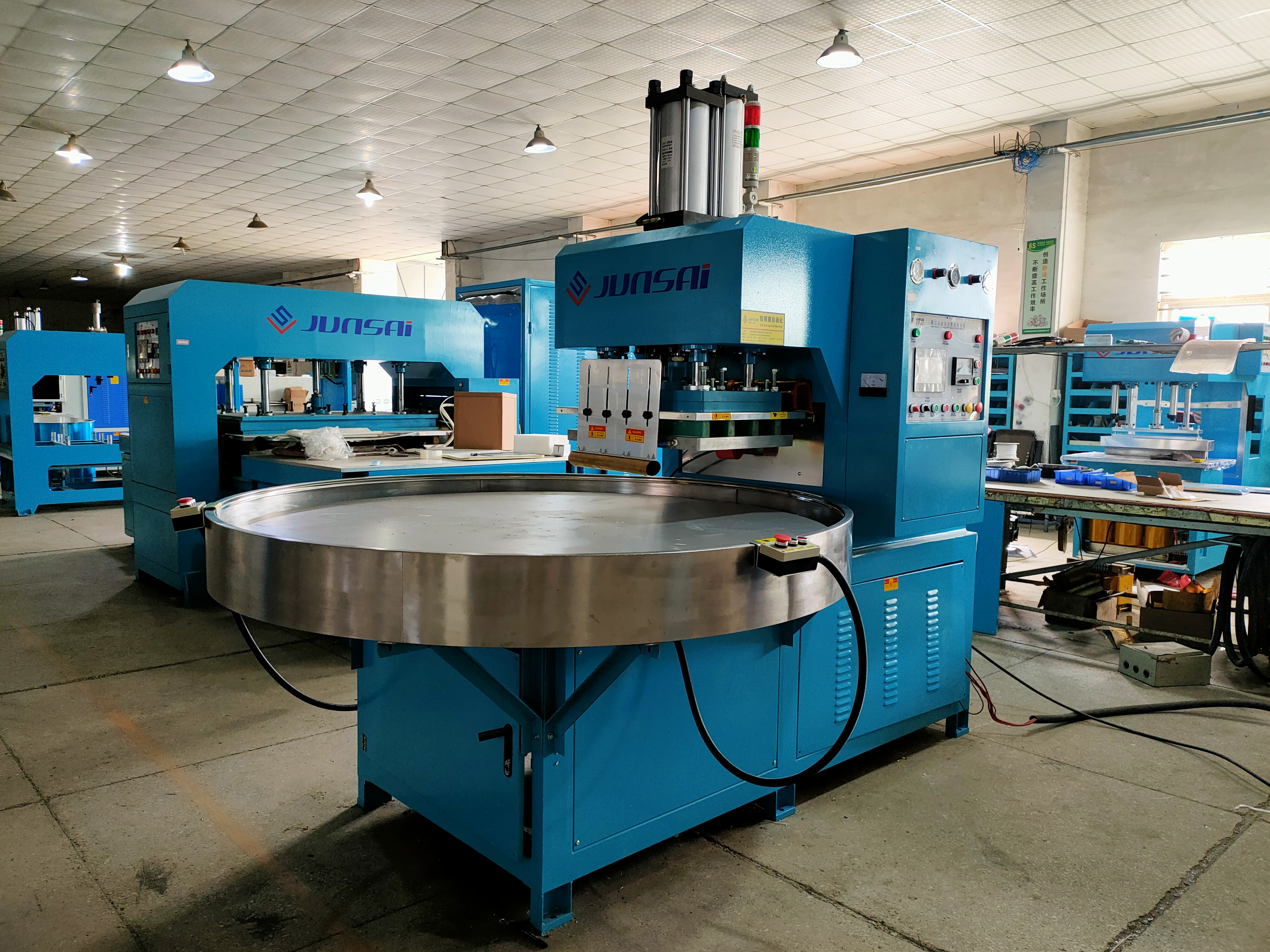
Core Key Points 1.Working principle of HF welding & applicable polar materials (PVC, TPU, EVA, PU) 2.3 core selection standards: product size, material thickness, daily output 3.Classification of HF machines & matching production scenarios 4.Power matching table: 5kW/8kW/10kW/15kW/25kW application range Critical configurations buyers cannot ignore: spark protection, imported vacuum tube, solid frame
read >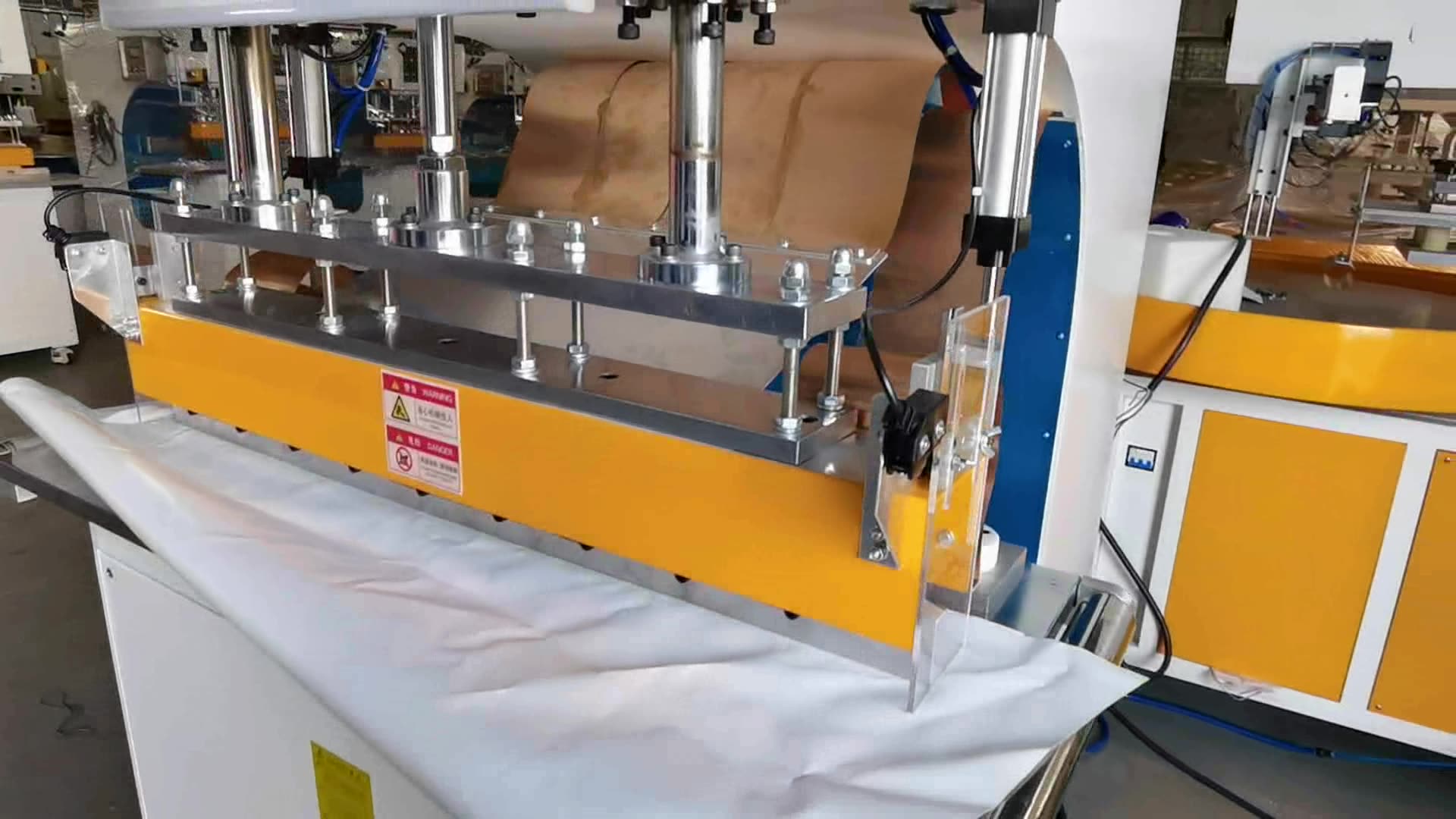
In the world of industrial manufacturing, precision, speed, and durability are non-negotiable. One technology that has transformed industries like automotive, packaging, medical devices, and textiles is radio frequency (RF) welding. It offers a fast, reliable, and cost-effective solution for joining various plastic materials with precision and strength. If you're in the market for a welding solution or are simply curious about this process, this guide will give you a comprehensive understanding of radio frequency welding machines, their components, and the benefits they bring to the table.
read >